REVIEW · ATHENS
Athens: Highlights Walking Tour Tickets Not Included
Book on GetYourGuide →Operated by MTM Experiences · Bookable on GetYourGuide
Athens rewards slow looking, and this guided walk is designed for it. You’ll cover top Acropolis monuments plus major central Athens landmarks in one smooth route, with a trained guide explaining what you’re seeing as you move. I especially like that it mixes the famous photo stops with city-orientation moments around Plaka and pedestrian streets, so you don’t just march from ruin to ruin.
What I like most is the guided storytelling—you get clear context for the Parthenon, Propylaia, the Nike Temple, and the surrounding viewpoints. I also like the pacing: it’s long enough to feel like a real tour (198 minutes), but not so long that you’re constantly sprinting uphill without a plan.
One drawback to plan for: major sites can be affected by closures or special days, and entrance to certain areas may not work as expected on some dates. That said, a good guide can still keep the experience coherent, but it’s smart to know this is possible.
In This Review
- Key Things You’ll Enjoy on This Athens Highlights Walk
- A 3+ Hour Athens Walk That Actually Helps You Understand the City
- First Stops: Guards, Gardens, and Zappeion Before the Climb
- Temple Columns and Hadrian’s Arch: Seeing the Acropolis Story From Below
- Plaka to Dionysiou Areopagitou: Orientation Through the Streets
- The Walk Up: Your Viewpoint Prep for the Acropolis
- Acropolis World Heritage Highlights: Parthenon, Propylaia, Nike Temple, and Friends
- Parthenon: More Than the Icon Photo
- Propylaia: The Grand Gate That Sets the Tone
- Nike Temple: Small, Specific, and Important
- The Surrounding Sacred Areas You Can Make Sense Of
- Ancient Agora and Odeon: Where Athens Feels Like a Living City Again
- Price and What You’re Really Paying For (Acropolis Fees Are Extra)
- Guide Quality: What You Should Know Before You Go
- What to Bring and How to Pace the Day
- Who This Tour Fits Best
- Should You Book This Athens Highlights Walking Tour?
- FAQ
- What is included in the Athens Highlights Walking Tour?
- What is not included?
- How long is the tour?
- What language is the guide?
- What should I bring?
- Is the tour refundable if my plans change?
- Do I need to purchase tickets ahead of time?
Key Things You’ll Enjoy on This Athens Highlights Walk
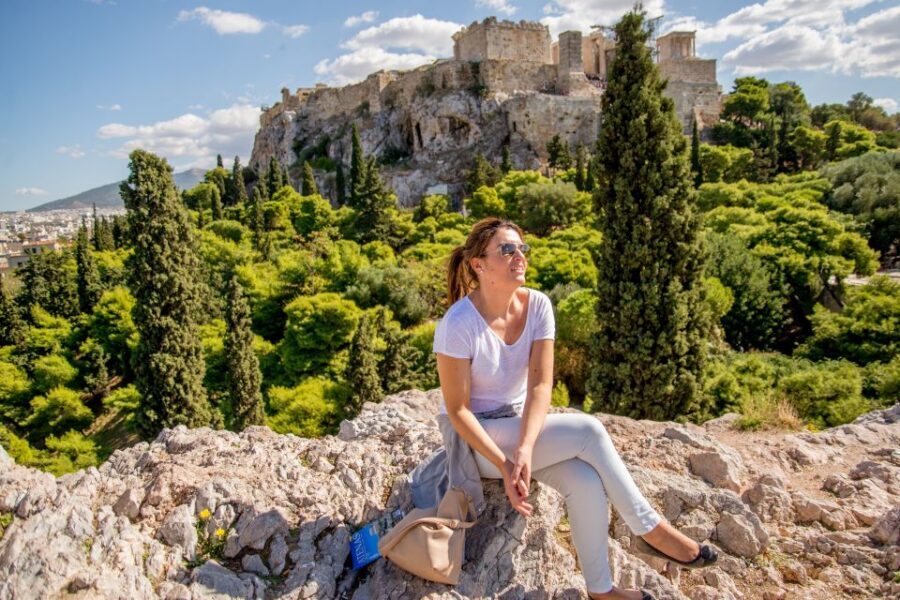
- Acropolis focus with real explanations of Parthenon and nearby monuments, not just photos
- A guided climb route that includes viewpoints and orientation landmarks along the way
- Central Athens mix: Plaka, pedestrian streets, and classic monuments beyond the Acropolis
- Multiple sight lines from places like Philopappos Hill and Mars Hill (great for understanding the city layout)
- Guides named for their helpful tone, including Mrs Nelly, Victor, and Laura, according to past group experiences
A 3+ Hour Athens Walk That Actually Helps You Understand the City

This tour works because Athens is complicated in a way that maps don’t fix. The Acropolis isn’t just one hill—it’s a whole system of sacred spaces, viewpoints, and neighboring sites that explain how ancient Athenians thought about power, gods, and city life.
In about a little over three hours, you get a focused route through central Athens and up to the Acropolis highlights. You’ll also pass recognizable modern landmarks that help you mentally place everything you’ll see later, including the switch from city streets to ancient stone.
Most walking tours stop at the big names only. Here, you’re guided through the connections: how Propylaia functions as a grand gateway, why the Nike Temple sits where it does, and how the surrounding areas you can see from matter just as much as the monuments themselves.
A few more Athens tours and experiences worth a look


First Stops: Guards, Gardens, and Zappeion Before the Climb
Your walk begins around the center of Athens with the Greek House of Parliament and the Monument of the Unknown Soldier, where you watch the changing of the guards. It’s a quick, lively start that gives you a sense of place before you move into the quieter, older layers of the city.
Then you head through the National Gardens. This is one of those “small but smart” parts of the route: it breaks the tour up, gives you a breather, and keeps the walking from feeling like nonstop hustle.
Next comes St. Paul’s Anglican Church area and then the neoclassical Zappeion Hall. This part helps you understand Athens as a living capital, not a museum. It also sets up one of the visual clues you’ll later appreciate near the Acropolis approach.
Temple Columns and Hadrian’s Arch: Seeing the Acropolis Story From Below

Before you reach the Plaka area, you’ll pass by a spot where the surviving columns of the Temple of Zeus and Hadrian’s Arch tower over the area in front of you. Even if you’ve seen pictures of these landmarks, seeing them in context helps your brain connect the dots: this region wasn’t built as isolated monuments. It was built as a connected urban statement.
This is also a good reminder that Athens wasn’t frozen in ancient times. The city kept transforming, reusing spaces, and building new layers on top of older ones. You’ll feel that transition again when the route shifts toward the pedestrian streets leading to the Acropolis.
If you’re the type who likes to understand why places are where they are, this “from below” section pays off. You’re setting up angles and sight lines for what comes next.
Plaka to Dionysiou Areopagitou: Orientation Through the Streets
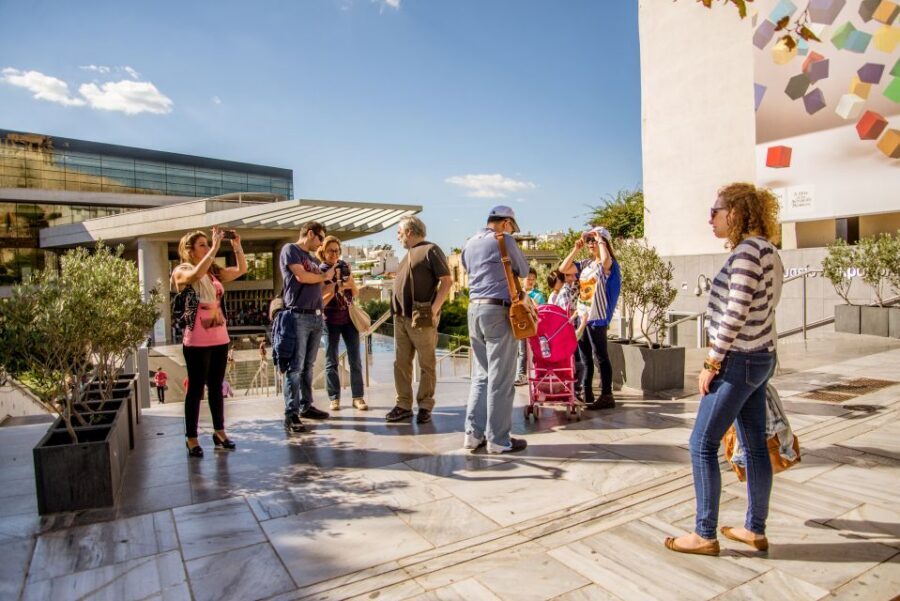
Once you head toward Plaka, you’ll notice Athens is arranged for wandering. You’ll even see a portrait of Melina Merkouri as a marker along the way, which helps ground the walk in modern cultural identity.
The route continues via the Dionysiou Areopagitou pedestrian walkway. That matters because the Acropolis is easiest to enjoy when you’re not fighting traffic or constantly recalibrating directions. You’re walking in an atmosphere built for looking and slowing down.
This segment also supports the tour’s main goal: getting you ready for the climb. By the time you start moving toward the Acropolis, you’re already in the right mental mode—Athens is telling you a story in order, and you’re in step with it.
The Walk Up: Your Viewpoint Prep for the Acropolis
The tour includes the mythical-feeling climb to the Acropolis, with spectacular city views as you go. You don’t just get elevation here—you get perspective.
As you rise, your guide’s job becomes more important than ever. From the ground, the Acropolis can look like a single landmark. Up there, it becomes a map of sacred spaces and political symbolism. The guide helps you read what you’re seeing while you’re still moving and before everything becomes too overwhelming.
A practical note: comfortable shoes are not optional. You’ll be on foot for a bit, and the climb is part of the experience. If your legs get sore fast, consider bringing water early and keeping your pace steady rather than trying to “win” the uphill section.
You can also read our reviews of more walking tours in Athens




Acropolis World Heritage Highlights: Parthenon, Propylaia, Nike Temple, and Friends
Once you reach the Acropolis area, the tour is built around the monuments people actually came to see. The big three are the Parthenon, the Propylaia, and the Nike Temple, and your guide provides explanations tailored to what you can observe right then.
Parthenon: More Than the Icon Photo
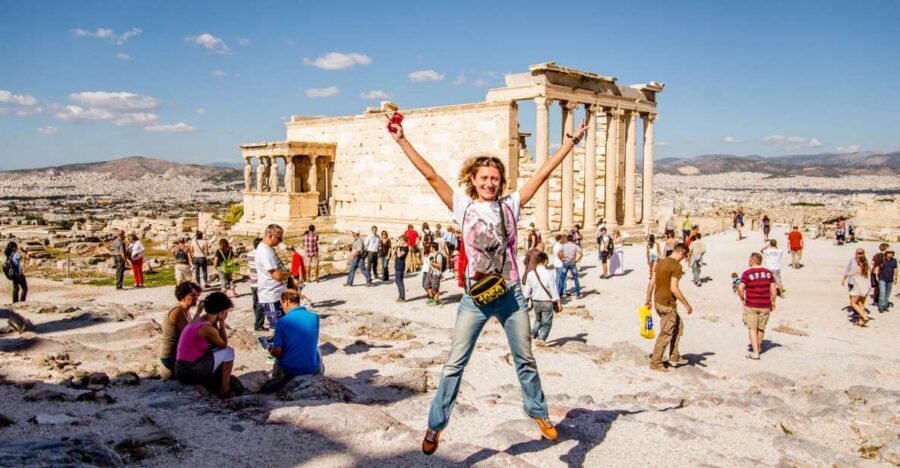
The Parthenon is the headline, but it’s also the best place to learn how to look. A guided walkthrough helps you notice architectural logic and the way the building still shapes views today. You’ll likely be encouraged to look at how space, elevation, and placement work together.
Propylaia: The Grand Gate That Sets the Tone
Propylaia is the kind of monument that feels like a threshold even if you’ve never studied it. With the guide’s context, it stops being a pretty entrance and becomes the beginning of a sacred approach.
Nike Temple: Small, Specific, and Important
The Nike Temple can seem minor compared to the Parthenon at first glance. But it’s precisely the sort of site that rewards guided attention—where it sits and what it communicates matters. When you’re told what to focus on, it clicks.
The Surrounding Sacred Areas You Can Make Sense Of
What I like about this tour is that it doesn’t treat the Acropolis as one building. You’ll get context for nearby monuments and sites such as the Dionysus sanctuary, and you’ll learn how viewpoints relate to the larger complex.
The route also references spots you may be able to see or reach as part of the broader Acropolis experience, including Philopappos Hill, Mars Hill, and an observatory area. You’re not only touring stones—you’re learning the city’s geometry.
And yes, you’ll cover Pnyx Hill and Odeon of Herodes Atticus, plus the Ancient Agora as part of the wider Athens picture. This is where the tour becomes more than a checklist. You start understanding how the Athenians staged ceremonies, gatherings, and public life around these spaces.
Ancient Agora and Odeon: Where Athens Feels Like a Living City Again
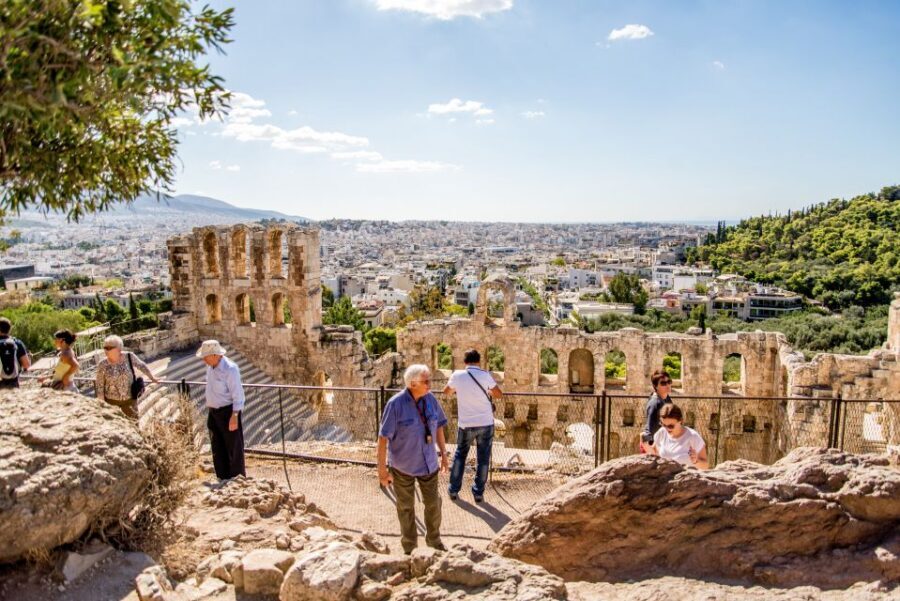
The Ancient Agora is a strong closing anchor because it puts everything in a different light. After walking through the Acropolis monuments, the Agora helps you shift from sacred symbolism to everyday civic life.
You’ll also encounter Odeon of Herodes Atticus, which helps you remember that Athens wasn’t just temples and politics. It also had performance spaces and cultural life baked into the city.
This combo makes the tour feel more balanced. Instead of ending with another “look at that big ruin” moment, you end with a sense of how the city worked as a whole.
Price and What You’re Really Paying For (Acropolis Fees Are Extra)
At $49 per person, the tour price is mostly paying for two things: a trained English-speaking guide and the structure of the walk—who explains each stop and how you move between them in a coherent route.
The big caveat is that the Acropolis entrance fee (EUR 20) and Acropolis museum entrance fee (EUR 5) are not included. If you plan to go into the museum, factor that into your total day budget. The tour also does not include pick up/drop off, so you’ll need to handle getting to the meeting area on your own.
Here’s how I’d think about the value: if you want independence, you can certainly self-tour. But if you want someone to point out what matters—Parthenon versus Propylaia versus the surrounding sacred areas—this guide-led structure is the shortcut. You’re paying for comprehension, not just access.
Guide Quality: What You Should Know Before You Go
This is where your experience can swing from excellent to just okay. The tour is guided in English, and past group experiences include guides like Mrs Nelly, Victor, and Laura, who were praised for being attentive and informative.
That said, not every guide’s delivery lands the same way for every visitor. One past group noted that English was harder to understand, and another noted that on a day when the Acropolis was closed (like a special holiday scenario), the tour still happened but with adjustments.
So my advice is simple: don’t go expecting a perfectly consistent experience on every date. Do go expecting a guide who wants you to understand what you’re looking at—and bring a flexible mindset for closures or altered access.
What to Bring and How to Pace the Day
This tour sets you up for classic “Athens in a day” walking fatigue if you’re underprepared. Bring comfortable shoes, water, comfortable clothes, and a camera.
Also think about your own rhythm. The tour duration is 198 minutes, which sounds short until you remember that it includes an uphill climb and multiple stop-and-look moments. You’ll likely move steadily but frequently. If you tend to get breathless on hills, slow down early and let the guide set the pace with explanations.
If you’re a photo lover, make sure you don’t rush the viewpoints. The best pictures usually happen when you pause long enough to understand where the light and angles are coming from.
Who This Tour Fits Best
I’d book this tour if you want:
- An Acropolis-focused guided experience that doesn’t treat the monument complex as one stop
- Help interpreting major sites like Parthenon, Propylaia, Nike Temple, and the surrounding areas you can reference during the climb and viewpoints
- A route that also includes key central Athens landmarks like Plaka and pedestrian streets, so you don’t feel lost afterward
You might choose something else if:
- You already know the Acropolis architecture well and want more freedom to linger solo
- You strongly prefer only indoor museum time (museum entry is optional and not included in the base price)
- You’ll be traveling during a date where closures can affect access, since some access can shift
If you’re doing Athens as a first-time visit, this walk is a strong orientation tool. It gives you a framework you can reuse when you come back later for deeper exploring.
Should You Book This Athens Highlights Walking Tour?
I think you should book it if you want the best kind of Athens souvenir: understanding. For $49, you’re buying guided direction through the Acropolis highlights and the central city approach, and that can save you hours of confusion and guesswork.
Book it confidently if your plan includes the Acropolis entry fee and (optionally) the museum. Plan realistically if your visit coincides with special closures, and give yourself space in your expectations.
If you’re choosing between doing it solo and doing it with a guide, this one leans toward being worth it. You’ll leave with a clearer map in your head and a better sense of how Athens fits together—up from the city streets and across the monumental slopes.
FAQ
What is included in the Athens Highlights Walking Tour?
The tour includes an English-speaking guide and taxes.
What is not included?
You’ll need to pay for Acropolis entrance fee (EUR 20 per person) and Acropolis museum entrance fee (EUR 5 per person), plus any personal expenses. Pick up/drop off is not included.
How long is the tour?
The duration is 198 minutes (about 3 hours and 18 minutes).
What language is the guide?
The tour is guided in English.
What should I bring?
Bring comfortable shoes, water, comfortable clothes, and a camera.
Is the tour refundable if my plans change?
Yes. There is free cancellation up to 24 hours in advance for a full refund.
Do I need to purchase tickets ahead of time?
Entrance tickets for the Acropolis and the Acropolis museum are not included, so you’ll need to arrange for those separately (the tour price doesn’t cover them).