REVIEW · ATHENS
Cooking Class with Aspasia in the Heart of Athens
Book on Viator →Operated by IT IS GREEK · Bookable on Viator
The best part of this Athens experience is that you cook in Aspasia’s own home, not in a polished restaurant kitchen built for tourists. Over about three hours, you prepare seven Greek dishes, then sit down together for the meal with wine and conversation. I like the personal setting, and I like that the menu crosses Greece, from Cretan dakos to Mani-style kayanas and Northern Greek ravani.
Aspasia is described as patient and warm, a real plus if you are not confident with a knife or a frying pan. The main consideration is the level of hands-on work: one person found the class more like being served a home meal than taking a formal cooking lesson. Read the menu closely and book this for friendly participation, not advanced culinary training.
In This Review
- Key points to know before booking
- Entering Aspasia’s Athens home
- The Greek menu, from barley rusks to stuffed peppers
- Paximadi with olives and graviera
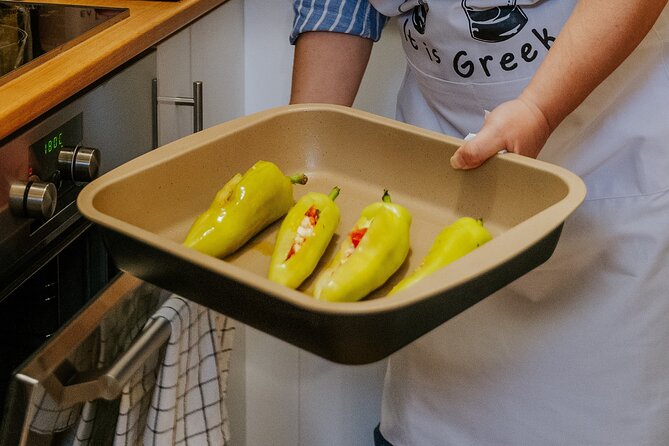
- Stuffed long sweet peppers
- Greek eggs kayanas
- Cretan dakos salad
- Greek meatballs with yogurt sauce
- Eggplants imam
- Ravani
- What the three-hour session feels like
- Food education without a formal cooking-school feel
- A private meal with wine and conversation
- Is $130.04 per person fair?
- Who will enjoy this Athens cooking experience?
- Should you book Aspasia’s cooking class?
- FAQ
- Where does the cooking class begin?
- Where does the experience finish?
- How long does the cooking experience last?
- Is the experience private?
- What language is the class offered in?
- What dishes are prepared?
- Is wine included?
- Is the meeting point near public transportation?
- Can I cancel for a full refund?
Key points to know before booking
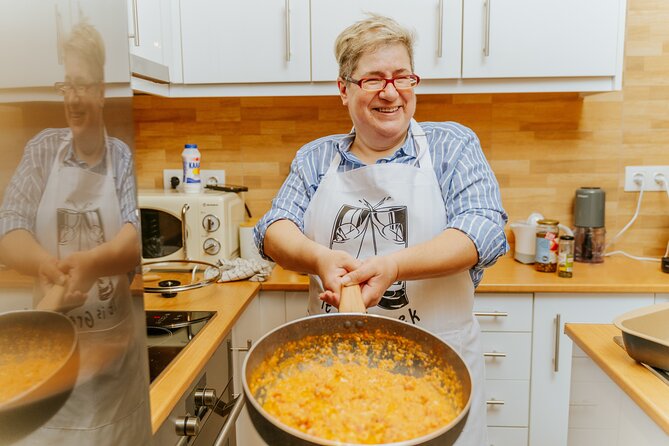
- Seven dishes cover several corners of Greece: You prepare starters, two main courses, and dessert rather than focusing on one recipe.
- Aspasia hosts you in her light-filled home: This is a personal private activity, not a group cooking school.
- The meal includes two glasses of white wine per person: The food you help make becomes the main event at the end.
- The class is conducted in English: That makes the instructions and food talk easy to follow for English-speaking visitors.
- The menu is familiar Greek comfort food: Expect peppers, eggs, tomatoes, meatballs, eggplant, cheese, and semolina cake, not rare ingredients or ambitious restaurant techniques.
- The price reflects the setting as much as the food: At $130.04 per person, you are paying for private hosting, instruction, a full meal, and a social evening.
Entering Aspasia’s Athens home
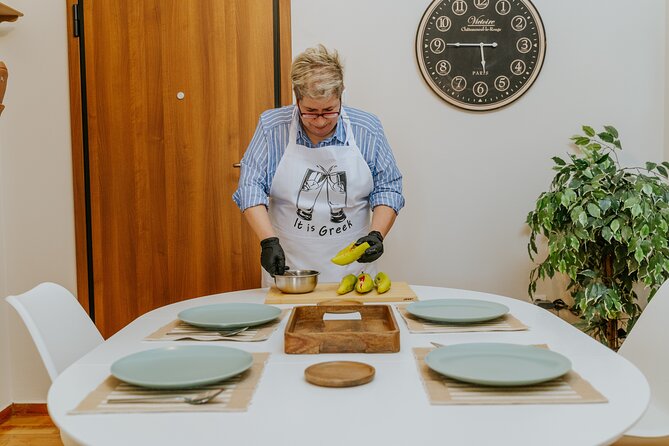
The meeting point is Tsocha 3, Athens 115 21, and the activity finishes at the same address. The experience takes place in a bright, harmoniously decorated home, which changes the mood from a standard class right away.
You are not simply shown to a workstation and handed a recipe card. The point is to spend time with Aspasia, help with the food, and talk as you go. That home setting is valuable if you want a more personal side of Athens, especially after a day spent moving between major sights.
This is a private activity, so only your own group takes part. That gives Aspasia room to adjust her attention to your pace, answer questions, and encourage you to take part in each stage. A private format can also make the evening less awkward if one person in your group cooks often while another rarely does.
The practical tradeoff is clear. A private home class has more warmth than a busy commercial kitchen, but it may have less formal structure. If you expect each person to prepare every element from start to finish, ask about the level of participation before booking.
You can also read our reviews of more cooking classes in Athens


The Greek menu, from barley rusks to stuffed peppers

The menu is the heart of the experience. It includes seven dishes, with small starters, two mains, and dessert. You get a broad taste of Greek home cooking in one sitting, but the dishes are intentionally familiar and approachable.
Paximadi with olives and graviera
The meal begins with paximadi bread, olives, and graviera cheese. Paximadi is a firm Greek bread, often made with barley, while graviera is a hard cheese that can taste slightly sweet or gently spicy.
This is a simple opening, but it gives Aspasia a chance to explain Greek pantry staples and regional flavors. Graviera is not the same as feta, and its firmer texture makes it useful as a table cheese or part of a larger spread.
Stuffed long sweet peppers
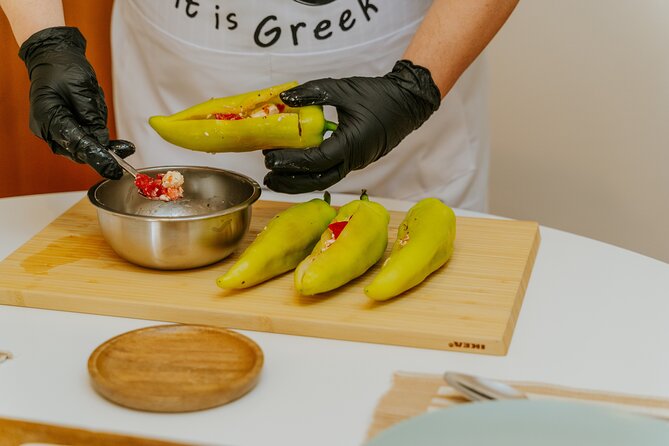
The long peppers are filled with feta, tomatoes, and herbs such as spearmint. This is a vegetarian dish with a straightforward method, making it a good early task for someone who does not cook often.
The ingredients also show how Greek food gets plenty of flavor without complicated sauces. The salt of the feta, the sweetness of the pepper, the acidity of the tomato, and the cool lift of mint do most of the work.
Greek eggs kayanas
Kayanas comes from Mani and combines scrambled eggs, fresh tomatoes, and cured pork called siglino. It is a rustic dish, closer to a generous home breakfast or supper than to a carefully plated restaurant course.
This is one of the menu’s more distinctive regional touches. The ingredients are easy to recognize, but the Mani connection gives the dish a stronger sense of place. If you want to learn how Greek families turn a few staples into a satisfying meal, this is a useful example.
A few more Athens tours and experiences worth a look




Cretan dakos salad
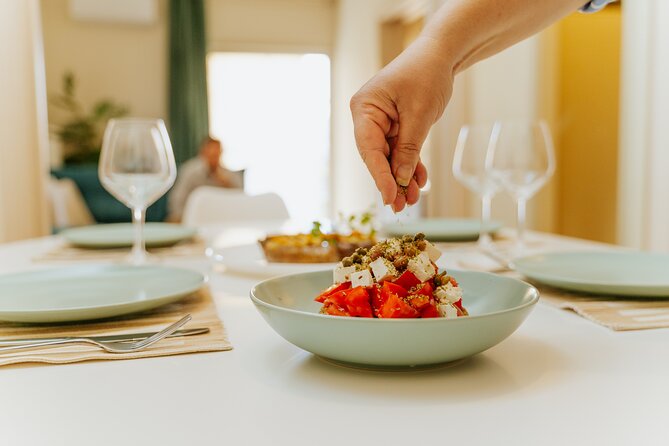
Dakos is associated with Crete and uses crisp barley rusks, tomato, olive oil, and feta. The rusks provide the crunch, while tomato juice and olive oil soften them into a hearty salad.
This dish is worth paying attention to because texture matters as much as flavor. It is not just a Greek salad with a different topping. The barley base gives it substance, and the tomato mixture brings everything together.
Greek meatballs with yogurt sauce
The meatballs are made with ground beef, flour, and Greek spices, then served with yogurt sauce. They are presented as a classic grandmother-style dish, which tells you what to expect: familiar, filling food rather than modern restaurant experimentation.
This may be the easiest dish for an experienced home cook to recreate. That is both its strength and its limitation. You can take the technique home without hunting for obscure ingredients, but a confident cook may not find the method especially challenging.
Eggplants imam
Eggplants imam are filled with onions, tomatoes, garlic, herbs, and spices. The dish depends on the eggplant becoming soft and absorbing the savory filling.
This is a good example of the class’s vegetable cooking. It is not a meat substitute dressed up as a main course. It is a traditional preparation where onions, garlic, tomato, and olive oil carry the flavor.
Ravani
Dessert is ravani, a semolina cake soaked in aromatic syrup. Its roots are in Northern Greece, giving the menu one more regional reference before the meal ends.
Ravani is sweet and moist, with the syrup doing much of the work. It also brings a different texture from the savory dishes, which makes it a fitting finish to a meal built around simple, sturdy ingredients.
What the three-hour session feels like
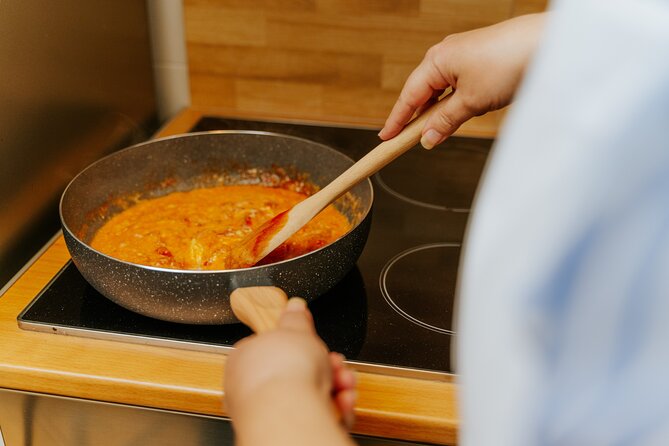
The activity lasts about three hours, which is long enough to cover a full menu without turning the evening into a rushed demonstration. Aspasia teaches recipes and shares information while you prepare the food, with conversation woven through the work.
The wording around the experience suggests an interactive session, and the strongest positive account describes Aspasia as patient and clear with someone who did not cook often. That matters. A good home class should help you feel comfortable enough to try, rather than make you worry about getting every step right.
Still, you should set your expectations carefully. The available feedback is sharply divided on how active the cooking feels. One person found that nearly all the food was prepared in front of the group, with encouragement to join in, but felt there was too much watching and eating and not enough individual cooking.
That difference may come down to your own level of participation. If you stand back, the experience can become a hosted meal with some instruction. If you ask questions, volunteer for tasks, and make clear that you want to work with the food, you are more likely to get the practical session you expect.
I would tell Aspasia at the beginning that you want to participate actively. Ask which dishes you will prepare, which steps you can handle, and whether she can explain the sauces, spices, and cooking choices as you go. Those questions are especially useful if you already cook at home.
Food education without a formal cooking-school feel
This class is best for learning how Greek home dishes fit together. You see how cheese, tomatoes, herbs, eggplant, barley, eggs, meat, and olive oil appear in different forms across the country.
The regional spread is one of the menu’s best features. Mani appears through kayanas, Crete through dakos, and Northern Greece through ravani. The dishes are not presented as an academic tour of Greek food, but together they give you a useful sense that Greek cooking is not one single formula.
At the same time, the menu is not highly unusual. Stuffed peppers, meatballs, bread with cheese, eggplant, and cake are recognizable foods. If you are hoping to learn rare island recipes or advanced techniques, this may feel too basic.
That is not a flaw for everyone. Familiar dishes are often the ones you will actually cook again. You can find the ingredients more easily, and you do not need professional equipment to reproduce the meal. For a beginner, this is a sensible starting point.
For an experienced cook, the value is less about technical discovery and more about the setting, the regional context, and the chance to talk through everyday Greek food with Aspasia. Go for the human connection and the meal, not for a masterclass in pastry or sauce work.
A private meal with wine and conversation
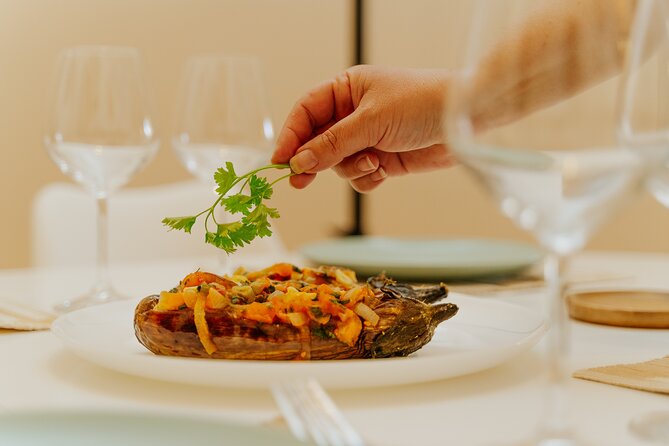
Once the cooking is done, you eat the food together. Two glasses of white wine are served per person, and the final meal is part of the experience rather than an extra charge at the end.
This shared table is where the private format makes the most sense. You have time to talk, compare the dishes, and ask follow-up questions while eating. One especially strong account described the evening as feeling personal enough to create a lasting friendship with Aspasia.
You should not treat the wine as the main reason to book. Two glasses add to the evening, but the real value is the combination of food preparation, hosting, and conversation in a private home.
The meal may also be substantial. Seven dishes is a lot of food, even though several are starters. If you prefer a quick lesson with one dish and a small tasting, this format will feel too long and too full. If you like sitting down to a generous homemade meal, the pace should suit you.
Is $130.04 per person fair?
At $130.04 per person, this is not a budget meal. You could spend less on a Greek restaurant dinner, especially if you are comparing only the amount of food on the table.
That comparison misses part of what you are buying. The price includes about three hours with a private host, hands-on preparation, seven dishes, and two glasses of white wine. You are also paying for a home setting and personal attention rather than a standard restaurant service.
The value depends on your goal. If you want dinner alone, the price is hard to justify. If you want an evening activity that combines cooking, cultural context, and a meal, the calculation is more reasonable.
I would book at this price if you care about meeting a local host and want a private experience for your own group. I would skip it if your priority is advanced technique, a low-cost meal, or a tightly structured class where every participant cooks every dish.
The fact that the experience is often booked about 29 days in advance suggests you should not leave it until the last minute if your Athens dates are fixed. That is useful planning information, though it does not change the class’s basic strengths or limits.
Who will enjoy this Athens cooking experience?
This is a good match for couples, families, and small private groups who like food and conversation. It also suits beginners, since Aspasia is described as patient and willing to explain the steps.
You will get the most from it if you are willing to participate actively. Roll up your sleeves, ask about ingredients, and say clearly that you want to help rather than simply watch.
The class is less suitable for:
- Experienced cooks seeking advanced instruction
- Diners who want to choose their own menu
- People who dislike familiar comfort food
- Anyone looking for a short, inexpensive restaurant-style meal
- Visitors who prefer a large group with a formal teaching format
The activity is offered in English, has a mobile ticket, and is near public transportation. Service animals are allowed. Confirmation is provided at booking, and you can cancel for a full refund up to 24 hours before the start time. Changes or cancellations inside that window are not accepted, and a minimum number of participants is required for the experience to operate.
Should you book Aspasia’s cooking class?
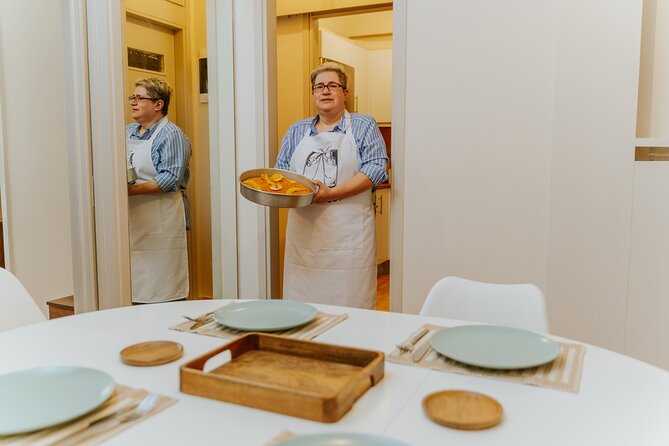
Book it if you want a private evening in an Athenian home, enjoy familiar Greek food, and value conversation as much as instruction. The seven-dish menu gives you a generous meal, and the regional touches make it more interesting than a basic lesson in Greek salad and souvlaki.
Go in with the right expectations. This is not guaranteed to feel like a professional cooking school, and the level of hands-on work may depend on how actively you take part. At $130.04, the price calls for a clear understanding of that distinction.
If you want a warm host, a full homemade meal, and recipes you can try again at home, this is a worthwhile Athens choice. If you mainly want technical training, carefully measured instruction, or a bargain dinner, spend your money elsewhere.
FAQ
Where does the cooking class begin?
The activity begins at Tsocha 3, Athina 115 21, Greece.
Where does the experience finish?
It ends back at the same meeting point where it begins.
How long does the cooking experience last?
The session lasts approximately three hours.
Is the experience private?
Yes. Only your own group participates in the activity.
What language is the class offered in?
The experience is offered in English.
What dishes are prepared?
The menu includes paximadi with olives and graviera cheese, stuffed long sweet peppers, Greek eggs kayanas, Cretan dakos salad, Greek meatballs with yogurt sauce, eggplants imam, and ravani.
Is wine included?
Yes. Each person receives two glasses of white wine.
Is the meeting point near public transportation?
Yes. The activity is listed as being near public transportation.
Can I cancel for a full refund?
Yes. You can cancel at least 24 hours before the start time for a full refund. Cancellations or changes made less than 24 hours before the start time are not refunded or accepted.