REVIEW · ATHENS
Philosophy Experiential Workshop at Plato’s Academy Park -Athens
Book on Viator →Operated by Hellas Revival · Bookable on Viator
Philosophy in Athens, outdoors and hands-on. I love the Socratic method style discussion, where you talk your way through ideas, not just listen. I also like the replica water-timer role-play, which turns a famous text into something you can actually act out. One thing to consider: this is weather-dependent, so a rainy day can change your plans.
You start with a quick visit to Plato’s Academy Digital Museum, which is free to enter and keeps the learning simple even if you are new to Greek philosophy. The group stays small (up to 10), so questions don’t get lost and the workshop feels more like a class than a scripted tour.
It’s aimed at adults and teens 14+, with room for families who want something smarter than the usual ruins-and-photos route. If you’re hoping for a traditional guided tour with lots of monuments and explanations from a distance, this is more thinking-and-discussing than sightseeing.
In This Review
- Key highlights you’ll feel in the session
- Why Plato’s Academy Park changes the whole mood
- The 2-hour flow: museum start, text work, and the Gymnasium ruins
- Plato’s Allegory of the Cave: how the discussion actually works
- Role-play with a replica water-timer: philosophy becomes a game
- When the museum is closed: the plan on other days
- The optional extra hour on Aristotle: virtue and choice
- Price and value for Athens: what you’re really paying for
- Who this workshop suits best (and who might want a different plan)
- Practical matters at the site: rules, weather, and your comfort
- Should you book Plato’s Academy Park philosophy workshop?
- FAQ
- How long is the philosophy workshop at Plato’s Academy Park?
- What language is the workshop offered in?
- Do I need any previous knowledge of Greek philosophy?
- What’s the group size limit?
- Is Plato’s Digital Museum always included?
- What ages can participate?
- What happens if the weather is bad?
- Is there an option to extend the experience beyond 2 hours?
Key highlights you’ll feel in the session
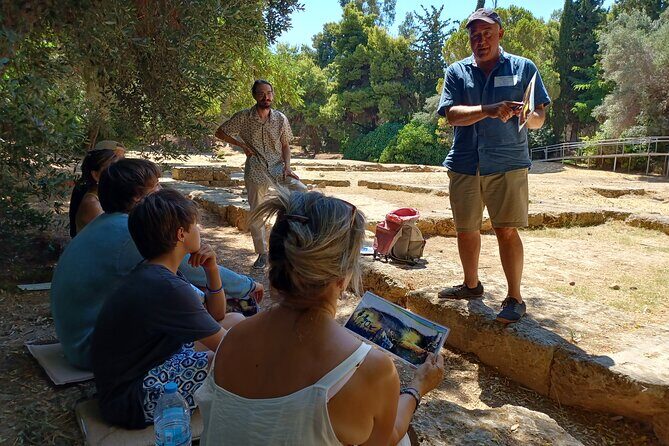
- Two parts that work together: a short museum stop plus an active philosophy workshop outside
- Socratic-style conversation: you interpret ancient Greek ideas with prompts, not lectures
- A real classroom tool: a discussion game using a replica ancient water-timer
- Plato’s Academy Park walkthrough: Socrates to Plato to Aristotle in a simple timeline
- Optional extra hour on virtue and choice: add-on for people who want more
Why Plato’s Academy Park changes the whole mood
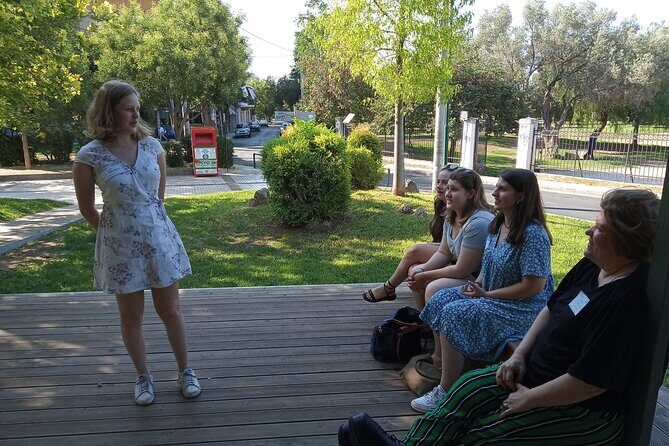
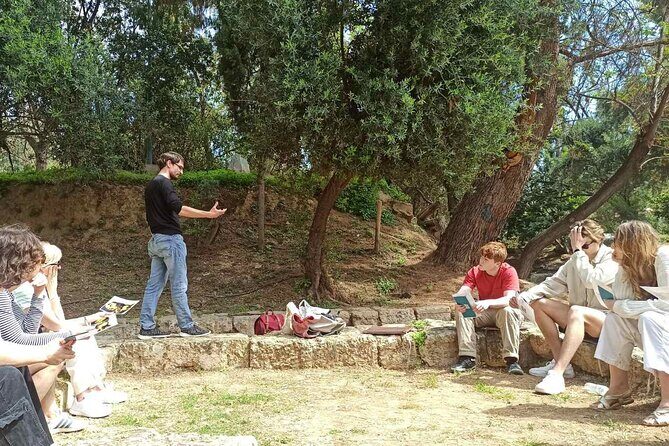
Plato’s Academy Park isn’t just a pretty historical site. It’s the right setting for philosophy because you’re surrounded by the places people tried to turn questions into methods. The workshop uses that fact on purpose: you read, interpret, talk, and role-play while you’re walking through the park and seeing the Gymnasium ruins area.
This is the opposite of the classic Athens formula where you rush from stone to stone, collect photos, and then forget most of it. Here, the goal is meaning. You’re asked to handle the ideas in plain English and apply them to how you think today.
There’s also good value in the format. At about two hours, you get a structured “start-to-finish” experience. And because it caps at 10 people, you don’t feel swallowed by a crowd. That small-group size is a big deal for a discussion-based activity.
A few more Athens tours and experiences worth a look



The 2-hour flow: museum start, text work, and the Gymnasium ruins
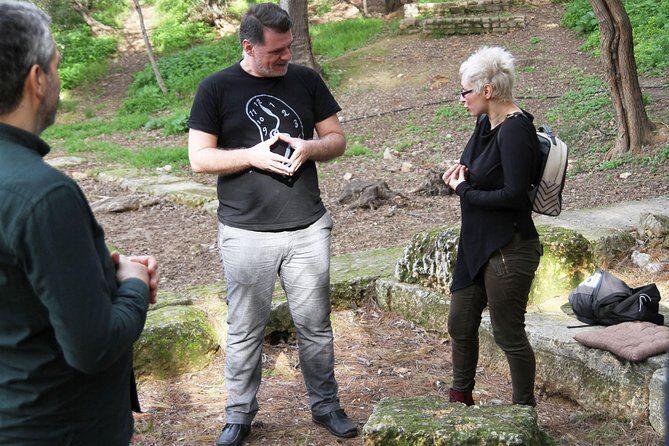
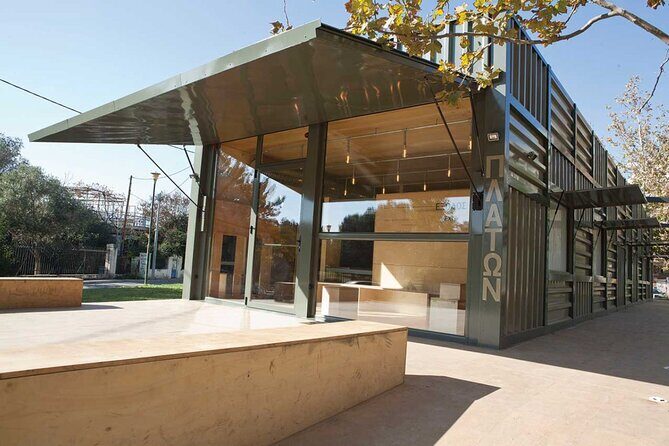
The timing is tight on purpose. The workshop begins at Plato’s Academy Digital Museum at Alkmeonos 1, Athina 104 42, Greece. From there, you do a brief museum visit, then transition into an outdoor philosophical warm-up.
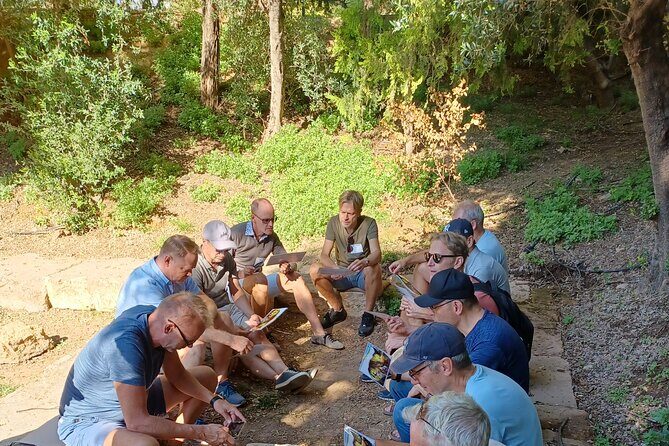
In that first phase, the facilitator has you read and interpret ancient Greek texts—without treating them like homework. If you’ve never studied philosophy before, you’re not expected to know Greek terms or academic jargon. The workshop is designed for straightforward participation, including for teenagers.
Then you stroll through the park to the area of the ancient Gymnasium ruins. This is where the session adds context: the instructor sets a clear timeline of Greek philosophy and connects Socrates, Plato, and Aristotle in a way that feels like a story you can follow.
What I like about structuring it this way is that your brain gets two entry points:
- the museum gives you a base
- the ruins give you a reason to care
If archaeological activity is happening, you might see the Gymnasium ruins from a short distance and then relocate to another spot in the park. That’s worth knowing, but it shouldn’t ruin the experience—it just changes the exact view you get while you talk.
Plato’s Allegory of the Cave: how the discussion actually works
The big centerpiece is a discussion of Plato’s Allegory of the Cave using a Socratic method. In practice, that means you are not just hearing what someone thinks. You’re guided through questions so you can build the interpretation step by step.
This approach matters because the Allegory is easy to misunderstand when it’s delivered like a one-time explanation. By turning it into an interactive back-and-forth, the workshop pushes you to slow down and ask: what does it mean to see something for the first time? What’s the cost of staying comfortable? And how do you judge what’s real?
You’ll also notice the facilitator steers the talk to keep it accessible. The activity is described as plain English, with no difficult terminology. So you’re not stuck decoding vocabulary before you can join the real conversation.
If you’ve done standard guided tours in Athens, you might expect something that sounds similar but stays passive. This doesn’t. You’re expected to respond, clarify, and react. That’s exactly why the setting feels right: you’re doing philosophy in the place where it’s traditionally associated with asking better questions.
Role-play with a replica water-timer: philosophy becomes a game
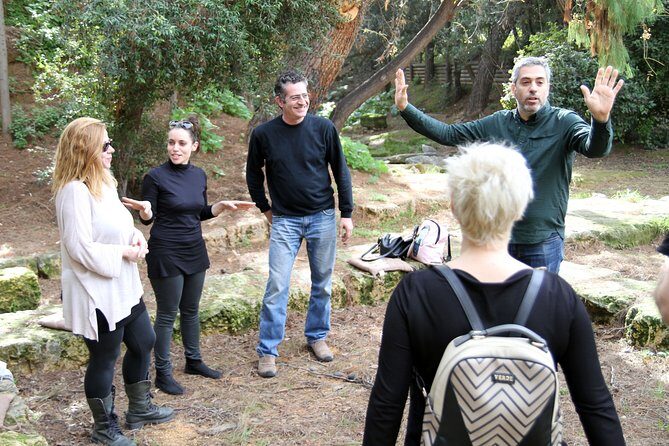
After the Cave discussion, the session gets hands-on. You take part in a role-play debate using a real replica of an ancient water-timer. This is a clever mechanic because it forces pacing and fairness—two things that matter whenever people argue about ideas.
Role-play can go two ways on travel experiences: awkward or meaningful. Here, it’s built as part of the teaching goal. The water-timer adds a physical structure to discussion, so you can practice the rhythm of argument, listening, and responding.
Even if you feel a little rusty speaking in a group, the format is less about performance and more about participating in the method. You’re not being graded. You’re practicing a way of thinking.
This is also where the session becomes memorable. Many Athens activities feel like they end as soon as you leave the site. A role-play debate tends to stick, because your brain remembers the moment you tried to apply an idea under time pressure.
When the museum is closed: the plan on other days
There’s a practical note built into the experience. Plato’s Academy Digital Museum is open Tuesday to Friday, from 10:00 AM to 4:00 PM. On other days, the workshop replaces the museum visit with an engaging discussion that covers the same key insights.
One more wrinkle: museum operations can change, and it may sometimes be closed without announcement. If that happens, expect the instructor to shift you into the discussion format so you still get the same learning outcomes.
For you as the traveler, the upside is flexibility. You don’t lose the workshop if the museum is unavailable. The downside is that you might not always get the same visual start, so the exact first 20-30 minutes can vary.
- All Day Cruise -3 Islands to Agistri,Moni, Aegina with lunch and drinks included
★ 5.0 · 4,958 reviews




The optional extra hour on Aristotle: virtue and choice
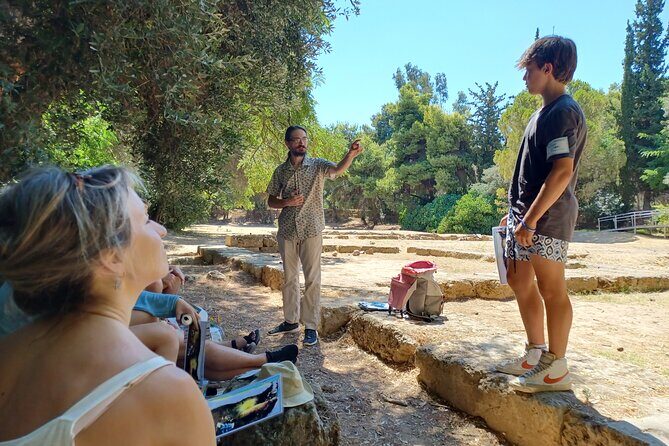
If you want more than Plato, there’s an add-on option for an extra hour focused on Aristotle’s philosophy. The session includes a thought-provoking game on virtue and choice.
This is a smart upgrade for two kinds of people:
- teens and adults who liked the Cave discussion and want another anchor idea
- families who want the workshop to feel longer and more interactive
The add-on is also a good way to connect the timeline you saw earlier. Since the main walkthrough connects Socrates, Plato, and Aristotle, this extra hour gives you a chance to explore Aristotle’s angle rather than just name-drop him.
Price and value for Athens: what you’re really paying for
The price is $53.92 per person, for about two hours. At first glance, that might sound like “just a small-group activity.” But the value comes from what you’re getting:
- An expert facilitator running an educational interactive workshop (not a traditional guided tour).
- A format that includes reading, walking, discussion, and role-play.
- Liability insurance and local VAT included in the price.
- A small maximum group size (10), which is crucial for a conversation-based experience.
In Athens, lots of activities compete on convenience and sight access. This one competes on learning design. It’s not trying to replace a big museum day or a classic walking tour. It’s a focused “thinking session” tied to a highly symbolic place.
There’s also a private option available upon request if you prefer a quieter, more tailored pace. And group discounts are mentioned, which can make the price feel friendlier if you’re booking with friends or family.
One practical thought: at this price point, you’re paying for engagement. If you want to watch and not talk, you might feel less satisfied. If you like questions, this is priced like it knows you’ll use them.
Who this workshop suits best (and who might want a different plan)
This works well for:
- adults and teens age 14+ who enjoy discussion and questions
- families who want a culture experience that’s more than a passive history lesson
- travelers who like small groups and don’t mind an outdoor walking component
It may not be ideal if:
- you strongly prefer traditional guided tours with minimal participation
- you have a strict schedule that can’t flex if weather affects an outdoor site
I also think it’s a good option if you’re tired of the “numbing ride past old buildings” feeling. The workshop is built to keep you mentally active the whole time.
One small note that matters for families: underaged participants can’t book alone. At least one adult must book and supervise.
Practical matters at the site: rules, weather, and your comfort
This is an outdoor experience at a historical heritage site. That means you should plan for real weather and comfortable walking shoes. If it’s canceled due to poor weather, you’ll be notified at least 3 hours ahead. You’ll then choose between another date, a similar workshop, or a full refund.
There are also etiquette expectations: respectful conduct around the place and people, cleanliness, and attention to clothing and noise level. Since it’s a public-space experience, you consent to possible photo/video shooting within the course of the service, with the option to withdraw consent in writing.
Service animals are allowed, and the meeting point is near public transportation. You’ll also return to the meeting point at the end—no complicated “transfer to another site.”
If you like planning ahead, booking about a month in advance seems common (it’s listed as frequently booked 34 days in advance). For popular dates, that kind of lead time can help you get the session you want.
Should you book Plato’s Academy Park philosophy workshop?
Book it if you want Athens to include thinking, not just looking. The combination of Plato’s setting, the Socratic discussion approach, and the practical role-play with the replica water-timer makes it feel like an experience you carry home, not just a stop on a map.
Skip it (or consider something else) if you hate discussion-based activities or if you need an indoor plan with zero weather risk. Also, if you’re expecting a guided monument tour, this won’t match that style. It’s explicitly an educational interactive workshop.
My final take: if you and your group enjoy questions—especially questions that connect ancient ideas to modern life—this is one of the best ways to spend two hours in Athens without letting your brain go on autopilot.
FAQ
How long is the philosophy workshop at Plato’s Academy Park?
It runs about 2 hours.
What language is the workshop offered in?
It’s offered in English, with plain-language explanations.
Do I need any previous knowledge of Greek philosophy?
No. The workshop is suitable for people without previous knowledge and uses simple English.
What’s the group size limit?
The workshop has a maximum of 10 travelers.
Is Plato’s Digital Museum always included?
It’s included as a brief visit when the museum is open (Tuesday to Friday, 10:00 AM to 4:00 PM). On other days, the workshop replaces that museum time with a discussion covering the same key insights.
What ages can participate?
It’s suitable for adults and teenagers over 14. Underaged participants cannot book alone and must have at least one adult booking and supervising.
What happens if the weather is bad?
If canceled due to poor weather, you’ll be notified at least 3 hours ahead and offered a different date, a similar workshop, or a full refund.
Is there an option to extend the experience beyond 2 hours?
Yes. There is an additional hour available on Aristotle’s philosophy with a game about virtue and choice, and there’s also a private option available upon request.