REVIEW · ATHENS
Private Mythology Tour of the Acropolis and Acropolis Museum
Book on Viator →Operated by Greeking.me · Bookable on Viator
Gods and marble, explained without the crowds. This private mythology tour keeps your group together, so you move at a human pace instead of waiting for strangers, and you get mobile tickets to cut down on paper fuss. It’s built for people who want the Acropolis story told through the myths that gave the place its meaning.
Two things I really like: the way the tour walks you past the key Acropolis landmarks in a guided sequence, and the focus on myth characters you’ll remember long after you leave. Guides such as Eva, Maria, and Xenia lean into stories tied to Athens, from medicine god Asclepius to Athena and Poseidon’s rivalry, and they pair that with what you can actually see at the site.
One consideration: the tone is myth-first, not archaeology-only. If you’re the kind of person who mainly wants dates, construction history, and political backstories, you may find the storytelling a touch more myth-heavy than you’d like.
In This Review
- Key takeaways before you go
- The real win: private pacing on Athens’ most crowded hill
- Start smart: the Acropolis approach and the first legends you’ll meet
- Parthenon and Erechtheion: how the guide turns marble into meaning
- What to watch for (so you don’t miss the point)
- Acropolis Museum: why the stop after the hill is the payoff
- Price and logistics: is $300.35 per person good value?
- Guides who can actually tailor the myth story
- How to make this tour feel easy (even when Athens is hot)
- Who should book this private Acropolis + Museum tour?
- Should you book? My practical take
- FAQ
- Is this tour private or shared?
- How long is the tour?
- What language is the tour offered in?
- Are entrance fees included in the price?
- Do I need printed tickets?
- Is private transportation included?
- Where does the tour start and end?
- Is there a souvenir?
- Can I cancel and get a refund?
Key takeaways before you go
- Private group pacing: no waiting on other people, and your guide can adjust to your questions.
- Myth-to-monument connections: Athena, Asclepius, and the Athena-Poseidon fight give the stones context.
- Museum time is built in: you get guided meaning for the objects found on and around the hill.
- Mobile tickets: downloadable entry details help you keep your phone ready, not your wallet.
- Pre-purchase skip-the-line option: you can arrange entrance tickets ahead of time to save heat-and-wait time.
- Licensed guide + souvenir: you’re paying for the human storytelling, plus a complimentary memento.
The real win: private pacing on Athens’ most crowded hill

The Acropolis is famous for a reason, but it can also feel like a theme-park bottleneck when you’re moving with a big crowd. What makes this tour feel worth it is that it’s private, so you’re not squeezed into a mass flow. You can pause for views, take a breath at the transitions, and actually follow the stories tied to each stop.
Another practical win: you’ll get downloadable tickets for your phone. In hot weather, every little bit of saved effort matters. You’re also not stuck printing anything or hunting for the right confirmation page minutes before you reach the entry area.
The last piece is the tour length and rhythm. At about four hours total, with roughly 1 hour 30 minutes on the hill and another 1 hour 30 minutes at the museum, you get a strong full experience without burning an entire day. That leaves room afterward to wander the surrounding neighborhood at your own pace.
You can also read our reviews of more private tours in Athens



Start smart: the Acropolis approach and the first legends you’ll meet
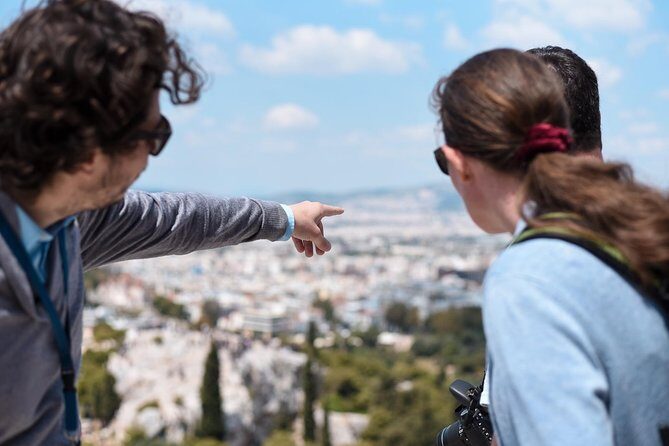
Your tour begins near AcropoliAthens, and you start with a walk toward Acropolis Hill. This part matters more than people think. The hill sets the scene: you’re heading upward into a place that was designed to impress, and the guide’s job is to help you notice the sequence of landmarks rather than just snap photos and hope it all adds up.
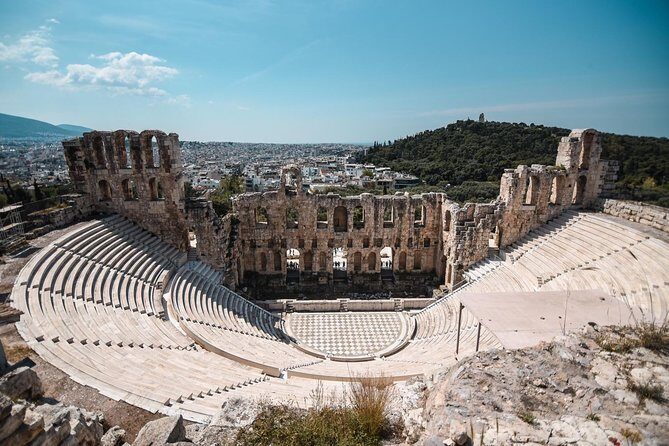
Early on, you’ll pass through some of the key “stage-setting” points that make the Acropolis feel like a living cultural hub, not just a single monument. You’ll find yourself at the Theater of Dionysus, a reminder that worship, performance, and public life were tangled together in Athens. Then the route takes you past the Asklepieion, linked to Asclepius, the god associated with medicine. Even if mythology isn’t your main interest, this is a memorable way to understand why the Acropolis wasn’t only about one building.
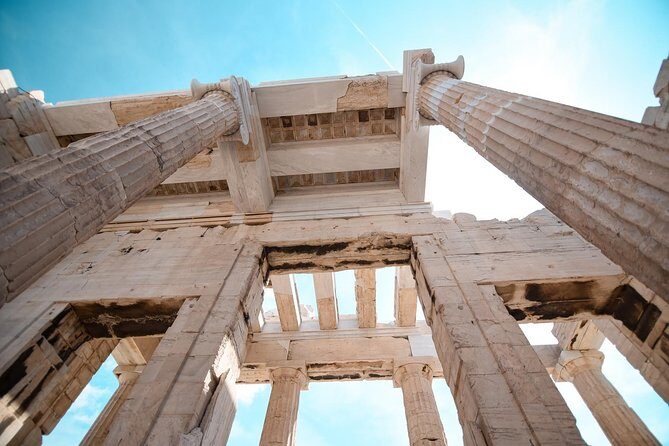
As you continue, the tour spotlights the big gateway moment: the Propylaea, the marble entrance that acts like a formal threshold. It’s the kind of structure where the details are easier to appreciate when you’re walking with someone who knows what to point out.
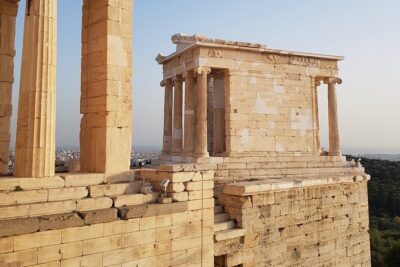
From there, you’ll hear about Athena Nike, the patron connection that helps explain why Athena imagery matters so much in this landscape. It’s not just a name-check. It’s a way to understand what Athens wanted to project: power, protection, and identity tied to the goddess.
Parthenon and Erechtheion: how the guide turns marble into meaning
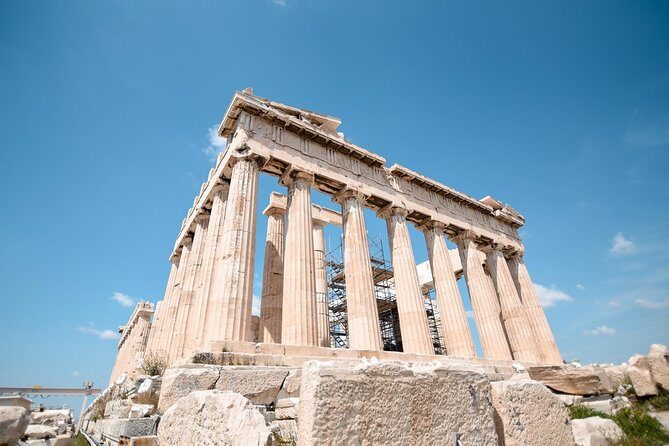
The Parthenon is the headline, but the real magic is how a guided story changes what you notice. When you reach it on this tour, you’re looking at one of the most important surviving buildings of ancient Greece and a standout example of Doric architecture. It’s easy to stare at the iconic silhouette and stop there. On a myth-oriented tour, the guide pushes you to look again through a different lens: what it meant, why it mattered, and how the surrounding structures connect to the gods who defined civic life.
Then the route moves toward the Erechtheion. This is where a mythology tour earns its keep. The Erechtheion is tied to the cult space for both Athena and Poseidon, and it’s described as the setting for the myth about their contest for Athens. Even if you already know the headline story, hearing it while you stand near the place brings a different kind of comprehension. You can see how mythology worked as a map of identity: land, protection, legitimacy, and divine ownership in one package.
What to watch for (so you don’t miss the point)
When you’re at the Parthenon and Erechtheion, focus on relationships. Don’t only ask what each building is. Ask how they work together. On this tour format, the guide keeps nudging you toward those links, which helps the Acropolis feel like a system rather than a pile of famous things.
One more practical note: entrance fees aren’t included in the tour price. The good news is the tour can help you arrange skip-the-line tickets in advance, which is a lifesaver when lines stack up in the heat.
Acropolis Museum: why the stop after the hill is the payoff
After the hill, you walk to the Acropolis Museum, where the story shifts from outdoors to indoors. This is exactly the moment you want on the schedule, because the museum is built to hold the objects that connect to what happened on the hill.
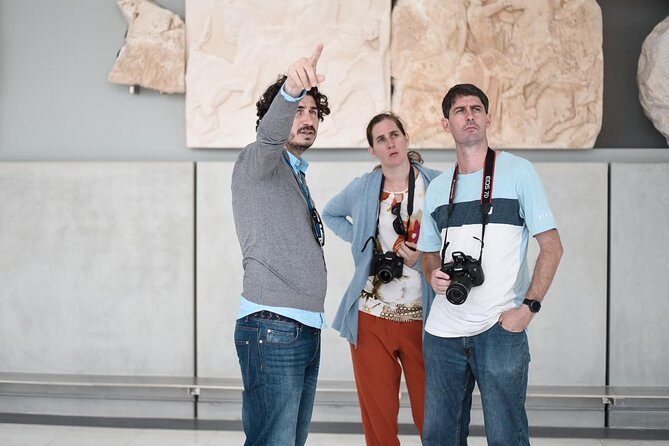
The museum experience here isn’t just a self-guided shuffle. You’ll have a guide translating the artifacts into narrative: what the pieces are, how the excavations connected them to the Acropolis, and how they fit into the myth and ritual world you just saw outside. The framing is described as both loving and horrifying, which is a reminder that ancient myths weren’t polite bedtime stories. They were the way people explained forces they couldn’t control.
This is also where time pays off. You’ll want to slow down and actually look at the display logic and the scale of objects. The museum helps you answer a question that many people leave the hill still asking: where did all the details go? Here, you see them in context.
A practical tip: if you’re tempted to race through the museum to get more sightseeing done, don’t. The museum is what helps the Acropolis click as more than a view. It’s the place where the guide’s myth framing becomes physical.
You can also read our reviews of more museum experiences in Athens



Price and logistics: is $300.35 per person good value?
At $300.35 per person for about 4 hours, this is not a bargain-basement tour. But private guided time at the Acropolis isn’t cheap anywhere, and the value comes from what’s included.
Included items cover the core reason to book: a licensed guide, the mythological storytelling for both the Acropolis and the museum, and all taxes and VAT. You’re also getting a complimentary souvenir, which is a small touch but still a nice reminder that the tour is designed as an experience, not just a walking service.
What’s not included is the part that can change your total budget: entrance fees to the archaeological sites. You can request skip-the-line tickets to pre-purchase, which helps avoid long waits. Also not included: private transportation. That’s common, and it’s usually fine since the meeting point is near public transit, but it’s something to plan for if you’re relying on taxis or walking long distances.
Here’s the value math I use: if you care about having someone guide your attention, translate the myths, and keep the experience organized, private guided time is often worth the premium. If you just want to see famous structures and you’re happy reading guidebooks on your own, you might spend less elsewhere. The sweet spot is being curious enough to appreciate a guided story while also preferring not to be stuck in a big crowd.
Guides who can actually tailor the myth story
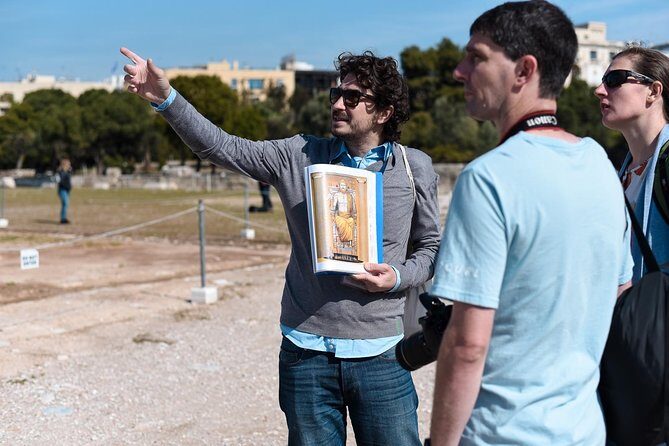
One reason people rave about this kind of tour is the human factor: when the guide is strong, the Acropolis stops being a collection of names. The review highlights names like Maria, Eva, and Xenia, with praise for being engaged and adaptable.
You should expect the guide to narrate the sites in a way that connects myth characters to what you’re seeing. In other words, you’re not only learning facts. You’re learning why those facts mattered to Athens.
It’s also worth noting that the myth emphasis can be a feature or a flaw depending on your style. I like mythology on the Acropolis because it explains symbolism and civic identity fast. But if you want deeper construction history and more political analysis, ask yourself if you prefer a myth framing or a more straight history framing.
How to make this tour feel easy (even when Athens is hot)
This is Athens in the summer-style category for many visitors, and crowds can hit hard. The best move is to plan your own energy so you don’t rush the tour.
Here are three simple habits:
- Wear good walking shoes for uneven stone and uphill sections.
- Have your phone ready for the mobile tickets so entry is quick.
- Use your guide’s pacing. If you feel slowed down, say so. Private means the plan can flex a bit.
There’s also a practical timing idea: arrive early if you can. The Acropolis entry area sees a lot of movement, and getting organized early makes the start feel calmer.
After the tour, you’ll be back at the meeting point and ready to explore more of the neighborhood. That half-day format is a big win because Athens is best when you mix “big monuments” with wandering streets and small meals.
Who should book this private Acropolis + Museum tour?
This experience fits best if you:
- want a private guided structure instead of a big group schedule
- love mythology tied to real places, not just generic legends
- want both the hill monuments and the Acropolis Museum connected in one story
- are traveling with someone who benefits from an engaging guide, including teens (the storytelling style is designed to hold attention)
You might want to think twice if you:
- only want strict archaeology facts and dates
- prefer a mostly self-guided visit where you control every pace with zero narration
Should you book? My practical take
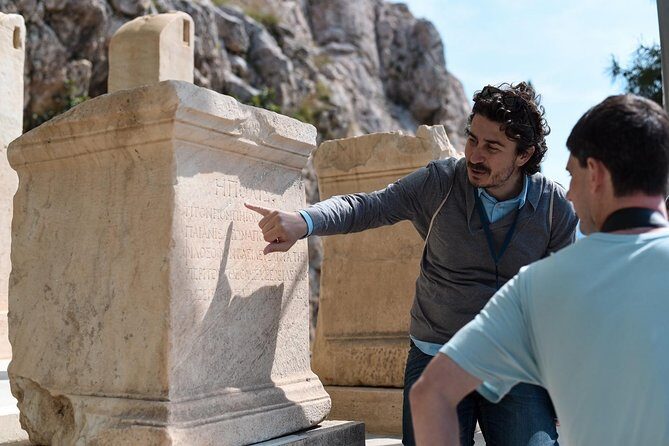
If you’re spending time in Athens and you only have half a day to do the Acropolis properly, I think booking this type of private mythology tour makes sense. The guide does the heavy lifting of turning famous structures into a coherent story, and the museum stop prevents you from leaving with a head full of names but no objects to connect them to.
The main reason not to book is if you strongly prefer history-first narration. If that’s you, you can still enjoy the museum, but you might feel like the myth angle takes more time than you wanted.
If you like the idea of standing at the Theatre of Dionysus, hearing about Asclepius, then moving through Propylaea, the Parthenon, and the Erechtheion while the story stays tied to gods and civic identity, this tour is an efficient, memorable way to make the Acropolis click.
FAQ
Is this tour private or shared?
This is a private tour/activity, meaning only your group participates.
How long is the tour?
The tour runs about 4 hours (approximately), split between the Acropolis and the Acropolis Museum.
What language is the tour offered in?
The tour is offered in English.
Are entrance fees included in the price?
No. Entrance fees to the archaeological sites are not included. You can request that skip-the-line tickets be pre-purchased.
Do I need printed tickets?
No. Downloadable tickets are provided for mobile phones, which helps you save paper and time.
Is private transportation included?
Private transportation is not included.
Where does the tour start and end?
It starts at AcropoliAthens 117 42, Greece, and ends back at the meeting point.
Is there a souvenir?
Yes. You receive a complimentary souvenir to remember your mythology adventure.
Can I cancel and get a refund?
Yes. You can cancel for free up to 24 hours in advance for a full refund.