REVIEW · ATHENS
4-Day Classical Tour Greece: Epidaurus, Mycenae, Olympia, Delphi, Meteora
Book on Viator →Operated by Filippis Tours · Bookable on Viator
The big appeal here is simple: in four days, you reach Greece’s major mainland sights, from the near-perfect theatre at Epidaurus to the cliff-top monasteries of Meteora. You also see places that are awkward to connect by public transport, including Olympia and Delphi.
I like the included licensed guide, who gives the ruins a clear thread instead of leaving you to guess what each broken column once meant. I also like the practical package: transport, three breakfasts, three dinners, hotel nights, entrance fees, and taxes are covered, so you can focus on the sites rather than daily arrangements.
The catch is the pace. Long drives and short visits make this a greatest-hits tour, not a slow archaeological study. Stops at craft shops, wine tastings, or art studios may also use time you would prefer to spend among the ancient stones.
In This Review
- Key points at a glance
- What this four-day Greek tour really covers
- Day one: Epidaurus, Nafplion, and Mycenae
- The theatre at Epidaurus
- A short pause in Nafplion
- Mycenae and the Tomb of Agamemnon
- Day two: Olympia and the road to Delphi
- Walking through Olympia
- Across the Corinthian Gulf
- Day three: Delphi and the road north
- The sanctuary of Delphi
- On to Kalambaka
- Day four: Meteora and Thermopylae
- Two monasteries above Kalambaka
- Thermopylae and Leonidas
- The pace, group size, and guide service
- What is included and what you still pay
- Who should book this tour
- Should you book the four-day classical route?
- FAQ
- Where does the tour start?
- Is hotel pickup available?
- Where does the tour finish?
- What language is the tour offered in?
- How many people can join the tour?
- Are entrance fees included?
- How many meals are included?
- Is the city tax included?
- Is the tour suitable for people with limited fitness?
- What happens if bad weather cancels the tour?
- Can I cancel for a full refund?
Key points at a glance
- Four major historical centers in four days: Epidaurus, Mycenae, Olympia, Delphi, and Meteora form the backbone of the route.
- Theatre acoustics at Epidaurus: You get about an hour at one of Greece’s most famous ancient performance spaces.
- Olympia includes the stadium and museum: The visit covers the sanctuary of Zeus, the ancient track, and archaeological displays.
- Two Byzantine monasteries at Meteora: The final morning brings dramatic rock scenery and rare Byzantine art.
- A busy but efficient route: Organized road transport links places that would take far longer to arrange independently.
- A group of up to 50 people: That keeps the price manageable, but the experience may feel less personal than a small-group trip.
What this four-day Greek tour really covers
This is a concentrated tour of mainland Greece. It begins in central Athens and loops through the Peloponnese, across western Greece, north to Meteora, and back to Athens.
You are not simply visiting ancient ruins. The route moves through several distinct chapters of Greek history: Mycenaean palace culture, classical religion and sport, the oracle at Delphi, and Byzantine monastic life. That range is the tour’s strongest feature.
The price is $781.09 per person. That is a serious sum, but it includes three nights of accommodation, three dinners, three breakfasts, entrance fees, a licensed guide, transport, and taxes. Once you add hotels, intercity travel, admission tickets, and meals, the price can make sense for you if convenience matters.
You still pay for drinks, bottled water, personal spending, tips, and the city tax. The tax is listed as €5 per room per night for a three-star hotel or €10 per room per night for a four-star hotel. Since it is charged per room rather than per person, the amount depends on how you are accommodated.
A few more Athens tours and experiences worth a look
Day one: Epidaurus, Nafplion, and Mycenae
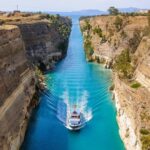
The tour leaves Athens at 8:30 a.m. from Leof. Vasilisis Amalias 22-24, with pickup available only from hotels in central Athens. The first road section follows the coastal route toward the Corinth Canal.
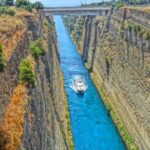
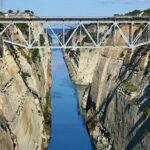
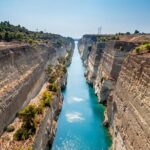
The canal stop is brief, but it gives you a useful first pause after leaving the city. You can have coffee and take photos of the narrow cut linking the Gulf of Corinth with the Saronic Gulf. Do not expect a full canal visit. This is a viewpoint stop, not a detailed sightseeing session.
The theatre at Epidaurus
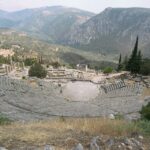
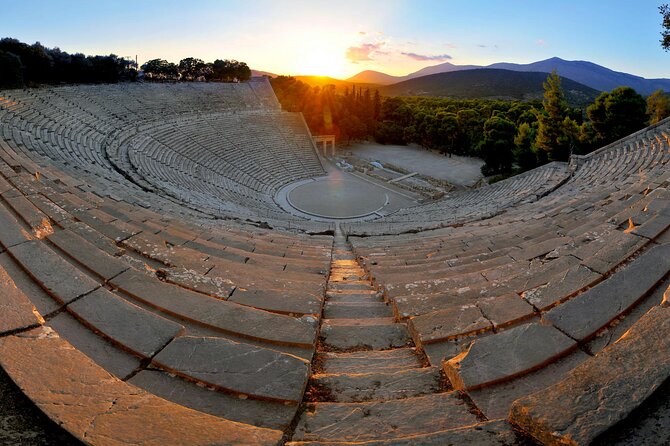
Epidaurus is the first major site, and it sets the tone for the trip. The ancient theatre is famous for its acoustics, created by its careful design and stone seating. From the stage area, even a quiet voice can carry impressively through the bowl.
You have about an hour here. That is enough to see the theatre and hear the main explanation, but you may want more time to look at the sanctuary area at your own pace. The site connects performance with ancient healing, though the schedule puts the theatre at center stage.
I like starting here because the theatre is immediately understandable. You do not need a long lecture to appreciate its shape, scale, and acoustic trick. If you enjoy architecture, this may be one of the most satisfying stops on the tour.
A short pause in Nafplion
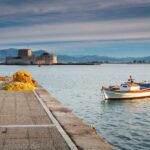
The route then reaches Nafplion, a small coastal city with colorful houses, old fortifications, and a rocky hill above town. The scheduled stop is only 20 minutes, so you will have time to stretch your legs and take in the setting, not explore the city in detail.
That short visit is one of the clearest examples of the tour’s tradeoff. Nafplion deserves a relaxed walk and a proper meal, but here it functions as a pleasant break between archaeological sites.
Mycenae and the Tomb of Agamemnon
At Mycenae, you visit the archaeological site and the Tomb of Agamemnon. The site recalls the powerful Mycenaean civilization, long before classical Athens became Greece’s best-known name.
The massive entrance, often called the Lion Gate, gives you a sense of the site’s defensive character. The tomb is a large beehive-shaped burial structure, and its scale is easier to appreciate in person than in a photograph.
The visit lasts about an hour. That lets you see the essential areas with a guide, but it leaves little room for a slow look at every corner. Afterward, the road heads through central Peloponnese, including Tripolis and Megalopolis, before reaching Olympia for dinner and the night.
This is a long first day. You get three important stops, but you also spend much of the day on the road. Pack water, wear shoes with a good grip, and treat the evening in Olympia as recovery time rather than a second sightseeing session.
- All Day Cruise -3 Islands to Agistri,Moni, Aegina with lunch and drinks included
★ 5.0 · 4,958 reviews





Day two: Olympia and the road to Delphi
After breakfast, the morning visit focuses on Olympia, the birthplace of the Olympic Games. The archaeological site includes the Sanctuary of Olympian Zeus, the ancient stadium, and the archaeological museum.
Walking through Olympia
Olympia works best when you picture it as a religious and athletic center rather than a single monument. The sanctuary once held temples and other buildings tied to worship, while the stadium hosted athletic contests.
The stadium is a highlight because its plain earth track makes the ancient competitions feel surprisingly direct. There is no modern stadium structure to distract you. You see the long running area and the banks where spectators once watched.
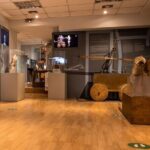
The museum adds the details that stones alone cannot provide. Sculptural fragments, architectural pieces, and objects from the site help you understand how the sanctuary looked and functioned.
The scheduled visit is about two hours, giving Olympia more breathing room than Epidaurus or Mycenae. Even so, you should stay aware of the group’s meeting time. It is easy to lose track of time among the ruins and museum displays.
Across the Corinthian Gulf
After Olympia, the coach travels through the plains of Ilia and Achaia. A major engineering landmark appears later in the day: the bridge from Rion to Antirion, crossing the Corinthian Gulf.
The route continues through Nafpaktos, also known as Lepanto, and Itea before reaching Delphi. These places are mostly seen from the road or through short pauses, so the value comes from the changing scenery and the sense of how widely the tour connects the country.
This is another full driving day. You should choose this tour because you want to connect distant sites, not because you want long afternoons in each town. Dinner and the night are in Delphi, putting you close to the next morning’s visit.
Day three: Delphi and the road north
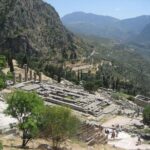
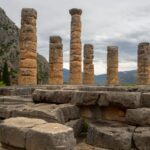
Delphi is one of the tour’s most important stops. In ancient Greece, this mountain sanctuary was linked to Apollo and the oracle consulted by rulers and ordinary people seeking guidance.
You visit both the archaeological site and the museum, with about two hours assigned to the stop. That combination matters. The site shows you the setting on the slopes of Mount Parnassus, while the museum brings important sculptures and objects into a more controlled display.
The sanctuary of Delphi
The climb through Delphi includes uphill sections and stairs. You do not need to be an athlete, but a moderate level of fitness helps. Wear firm walking shoes and take the uphill portions at your own pace.
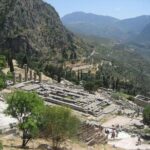
The setting is a major part of the experience. Terraces rise along the mountain, and the ruins appear in layers rather than on one flat field. The guide’s historical explanation is especially useful here because Delphi can otherwise feel like a collection of scattered stones.
The museum gives structure to what you have seen outside. It helps you connect architectural fragments and sculpture with the buildings on the slope. Two hours is workable, though anyone interested in ancient art may wish for more time.
On to Kalambaka
After Delphi, the coach continues to Kalambaka, the small town below Meteora. This is a substantial road transfer, and you arrive with the next day’s monasteries ahead of you.
Kalambaka is used as an overnight base. The practical advantage is clear: you wake close to Meteora instead of making the long journey from Athens on the same morning. Dinner and the night are included, leaving you free to rest.
Day four: Meteora and Thermopylae
The final day starts with an early breakfast. That early start is useful because Meteora is the visual climax of the route, and you want enough time to visit two monasteries before the return drive.
Two monasteries above Kalambaka
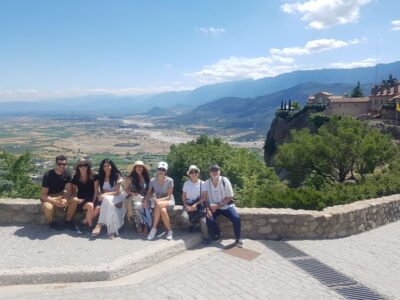
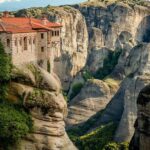
Meteora’s Byzantine monasteries sit on tall rock formations that rise sharply above the surrounding area. Their position is not just scenic. It reflects a monastic tradition built around isolation, difficult access, and spiritual retreat.
You visit two Byzantine monasteries and see Byzantine artifacts inside. The interiors are as important as the views, with religious art and objects that show the continuity of Orthodox worship.
Access involves steps and uneven surfaces. The supplied information specifically flags uphill and stairway conditions at Delphi, but Meteora also requires you to be ready for walking. Comfortable shoes and a steady pace are sensible choices.
The two-monastery visit gives you a meaningful introduction without trying to cover every religious site in the area. It also keeps the morning within a schedule that must eventually return to Athens.
Thermopylae and Leonidas
The return route goes through Trikala and Lamia, with a short stop at Thermopylae. You see Leonidas’s Monument, a reminder of the famous battle between the Spartans and the Persian army.
This is a brief roadside history stop rather than a full museum visit. It works well as a final pause after Meteora and before the long drive back to Athens.
The tour should reach Athens in the early evening and ends at the original meeting point. Pickup is available only from central Athens hotels, and you can provide your preferred location so the operator can advise you about the closest available pickup point.
The pace, group size, and guide service
The tour allows up to 50 people. A group that size can mean a lower cost and a workable coach operation, but it also means you should expect fixed departure times and less flexibility at each site.
The guide is one of the most important parts of this experience. The tour’s strongest praise centers on clear historical insight, with the guide, driver, and fellow participants all contributing to a smooth experience. The provider is Filippis Tours, and the listed service is in English.
No individual guide name is supplied, so you should not book this expecting a specific named guide. The owner and manager, Stamatis Filippis, handles guest responses, but the guide assigned to your departure may vary.
Craft shops, silversmiths, wine tastings, and art studios can appear along the route. These stops may give you a break from ruins and help support local crafts, but they can also frustrate you if your main goal is archaeology. Ask yourself which matters more: covering the broad route with built-in pauses, or spending every possible minute at ancient sites.
What is included and what you still pay
The package includes:
- A professional licensed guide
- Entrance fees for archaeological sites and museums
- Three hotel nights
- Three dinners
- Three breakfasts
- Taxes and listed tour fees
- Organized transport from Athens and back
Water and drinks during meals are not included. Tips and personal expenses are also extra. The city tax is paid directly to the hotel and is listed at €5 per room per night for three-star accommodation or €10 per room per night for four-star accommodation.
At $781.09 per person, the value depends on your travel style. I see good value if you would otherwise need to arrange several long-distance transfers, three hotel bookings, entrance tickets, and meals across four days.
I see weaker value if you already have a rental car, prefer independent timing, or want to stay longer at each site. The tour saves planning time, but you pay for a fixed schedule and a broad route.
Who should book this tour
I would recommend this tour to you if mainland Greece is a priority and your time is short. It is particularly useful for a first visit when you want to understand how the classical sites fit together, then add the very different Byzantine world of Meteora.
It suits people who enjoy history, do not mind long coach rides, and prefer having hotels and dinners arranged. The route also works well for anyone uneasy about driving unfamiliar Greek roads.
I would hesitate if you dislike early mornings, uphill walking, or structured group travel. You may also want a slower option if Nafplion, Olympia, Delphi, or Meteora is a personal highlight that deserves a full day.
The tour requires good weather. If poor weather cancels the experience, you are offered another date or a full refund. Free cancellation is available up to 24 hours before the 8:30 a.m. start, while changes or cancellations inside that window are not accepted.
Should you book the four-day classical route?
Book it if your goal is maximum historical coverage with minimum planning. You will see a remarkable range of places in four days: a theatre, a Mycenaean citadel, the Olympic sanctuary, Apollo’s oracle, Byzantine monasteries, and Thermopylae.
Do not book it expecting leisurely exploration. The main weakness is time. Some visits last roughly an hour, and the road connections are long. If you can accept that tradeoff, the tour offers an efficient first look at mainland Greece and a strong dose of context from the guide.
FAQ
Where does the tour start?
The meeting point is Leof. Vasilisis Amalias 22-24 in Athens. The listed start time is 8:30 a.m.
Is hotel pickup available?
Pickup is available only from hotels located in the center of Athens. You can provide your preferred pickup location, and the operator will advise you about the closest available point.
Where does the tour finish?
The tour returns to the original meeting point in Athens and ends there in the early evening of day four.
What language is the tour offered in?
The tour is offered in English.
How many people can join the tour?
The maximum group size is 50 people.
Are entrance fees included?
Yes. Entrance fees for the archaeological sites and museums, along with listed taxes and fees, are included.
How many meals are included?
Three breakfasts and three dinners are included. Water, beverages, and drinks during meals are not included.
Is the city tax included?
No. The city tax is paid directly at the hotel. It is listed as €5 per room per night for three-star accommodation or €10 per room per night for four-star accommodation.
Is the tour suitable for people with limited fitness?
The Delphi site includes uphill sections and stairs, and the tour advises that it may be moderate for people who are not in good physical condition. Meteora also includes monastery visits, so you should be prepared for walking and steps.
What happens if bad weather cancels the tour?
The experience requires good weather. If it is canceled because of poor weather, you are offered a different date or a full refund.
Can I cancel for a full refund?
Yes, if you cancel at least 24 hours before the local start time. Cancellations or changes made less than 24 hours before the start are not accepted for a refund.