REVIEW · ATHENS
Athens: City & Acropolis Walking Tour without Entry Tickets
Book on GetYourGuide →Operated by G.O.TOURS · Bookable on GetYourGuide
The best thing about this 3.5-hour Athens walk is the way it links modern Greece with ancient Athens. You begin at Syntagma Square, watch the Euzony guards, pass through the National Garden and Plaka, then reach the Acropolis on foot. It gives you a useful sense of how the city fits together instead of dropping you beside one monument and calling it a day.
I like the route for two clear reasons: it covers a lot without using transport, and it places the major Acropolis monuments in their wider setting. I also like the chance to see Hadrian’s Arch, the Temple of Olympian Zeus, the Pnyx, Mars Hill, Philopappos Hill, and the Odeon from the Acropolis area. The main caution is that entry tickets are not included, and the quality of the opening city walk may depend heavily on your guide.
In This Review
- Key points to know before booking
- Starting at Parliament in Syntagma Square
- Walking through the National Garden and Zappeion Hall
- The Temple of Olympian Zeus and Hadrian’s Arch
- Through Plaka toward the Acropolis
- Seeing the Propylaia, Temple of Nike, and Parthenon
- Looking beyond the Parthenon
- Why the Acropolis Museum is a smart follow-up
- What $46 buys you
- Who will get the most from this walk
- Should you book this Athens walking tour?
- FAQ
- Where does the tour meet?
- How long does the tour last?
- What language is the tour conducted in?
- Is hotel pickup included?
- Are Acropolis entrance tickets included?
- Does the tour visit the Parthenon?
- Which Acropolis monuments are included in the guided visit?
- Does the route include the Greek Parliament?
- What other central Athens sights are on the route?
- Is the Acropolis Museum included?
- Can I cancel the booking?
- Do I have to pay when I book?
Key points to know before booking
- Syntagma Square start: Meet at Hotel AMALIA Athens, directly by the Greek Parliament and the Monument of the Unknown Soldier.
- A city-to-Acropolis route: Walk through the National Garden, Zappeion Hall, the Temple of Olympian Zeus, Hadrian’s Arch, and Plaka before reaching the Acropolis.
- Core Acropolis monuments: See the Propylaia, Temple of Nike, and Parthenon with an English-speaking guide.
- Ancient Athens in one view: The guide points out the Agora, Pnyx, Mars Hill, Philopappos Hill, the Odeon of Herodes Atticus, and the Theater of Dionysus.
- Tickets cost extra: The tour price is $46 per person, but entrance fees are not included.
- A guide-led overview: The tour works best as an introduction, followed by your own visit to the Acropolis Museum.
Starting at Parliament in Syntagma Square

Your meeting point is Hotel AMALIA Athens, beside Syntagma Square. This is a handy place to begin because you are already in the center of modern Athens, with the Greek Parliament directly ahead.
The first stop is the Monument of the Unknown Soldier. Here you see the Euzony guards and their changing ceremony. It is one of Athens’ most recognizable public rituals, and it gives the tour a modern Greek opening before the route turns toward antiquity.
I like this start because it puts the ancient sights in context. Athens is not just a collection of ruins. It is also the capital of present-day Greece, and Syntagma Square is where that modern political life is easiest to see.
The guard ceremony may not be the most informative part of the tour for every person. One piece of feedback about this experience found the changing of the guards dull and felt the guide offered little commentary before the Acropolis. That is worth keeping in mind. If you are mainly booking for ancient monuments, the first section may feel like a warm-up rather than the main event.
A few more Athens tours and experiences worth a look


Walking through the National Garden and Zappeion Hall
From Syntagma Square, you walk into the National Garden. This gives you a break from the traffic and hard stone of central Athens. The route is pleasant, and it helps connect the main square with the archaeological sights farther south.
Next comes Zappeion Hall. The building is part of the historic center and provides a useful transition between the garden and the ancient monuments. The tour does not rush you straight to the Acropolis. Instead, it builds a route through several important parts of central Athens.
For me, this is one of the tour’s better choices. The National Garden makes the walk feel less like a march between ticketed sights. You get some breathing room, and the guide has a chance to explain how the city’s major civic, green, and archaeological spaces sit close together.
Still, this is a walking tour, not a private vehicle tour. You should expect a steady three-and-a-half-hour outing on foot. The supplied details do not give a full distance, pace, or accessibility description, so anyone concerned about walking should ask before booking.
The Temple of Olympian Zeus and Hadrian’s Arch

The route continues to the Temple of Olympian Zeus and Hadrian’s Arch. Even from the outside, these two sights help explain the scale and long timeline of Athens.
The Temple of Olympian Zeus was an enormous ancient project, and its surviving columns make the size easy to picture. Hadrian’s Arch is especially useful as a landmark because it represents the relationship between older Greek Athens and the Roman period. Your guide can use the arch to show how the city changed and expanded over time.
This section adds value because it gives you more than the familiar Parthenon. If you have only one day in Athens, it is easy to focus so tightly on the Acropolis that you miss the other monuments nearby. This walk keeps those places in your view.
The drawback is simple: entrance fees are not included. The tour description says you will see these monuments as part of the route, but it does not promise entry to every archaeological site along the way. You should treat this as a guided city walk leading to the Acropolis, not as an all-inclusive archaeology pass.
Through Plaka toward the Acropolis
From Hadrian’s Arch, the route enters Plaka and heads uphill toward the Acropolis. Plaka is one of the most appealing parts of central Athens for a first visit, and walking through it makes the approach feel gradual.
I like this part because you see the Acropolis as part of the city rather than as an isolated hill. The streets lead you from modern Athens into the older center, and the route gives you a better sense of orientation for later exploring on your own.
The Acropolis approach also changes the rhythm of the tour. The opening section is civic and urban. The garden section is quieter. Plaka feels more local and street-based. Then the route reaches the major archaeological site, where the guide’s historical commentary becomes more important.
You should allow extra time and energy for this section. The walk includes the city center, Plaka, and the Acropolis, so comfortable shoes are a sensible choice. The details do not promise a slow pace or frequent sitting breaks.
Seeing the Propylaia, Temple of Nike, and Parthenon
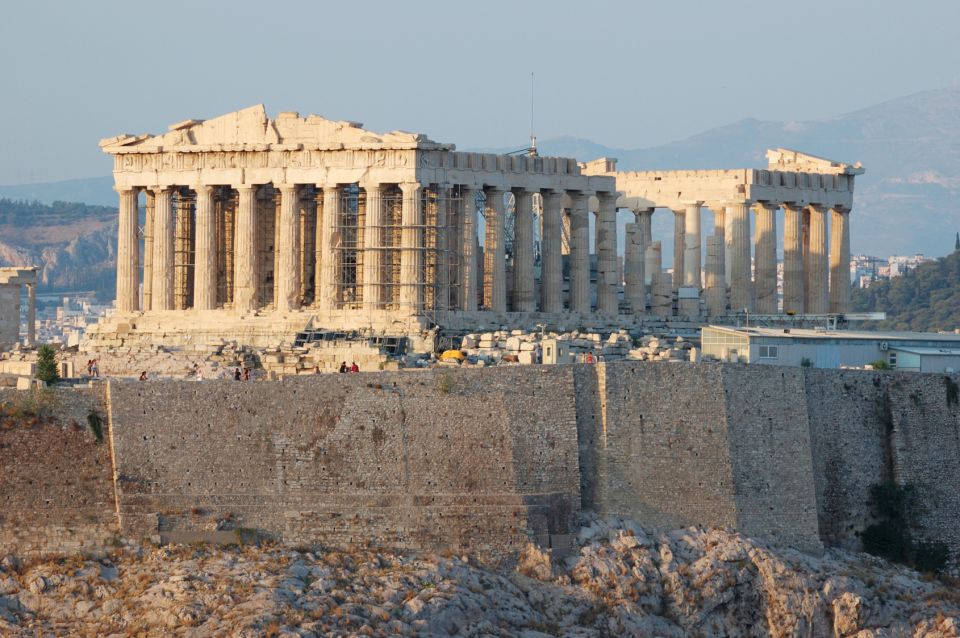
The main portion of the tour takes place at the Acropolis. With your English-speaking guide, you visit the Propylaia, the Temple of Nike, and the Parthenon.
The Propylaia is the grand entrance to the Acropolis. It is more than a gateway. It sets up the entire visit, making you aware that the hilltop was designed as a ceremonial space, not simply as a platform for one famous temple.
The Temple of Nike is smaller, but its position near the entrance makes it memorable. It is easy to overlook when the Parthenon receives most of the attention, so having a guide point it out is useful.
Then comes the Parthenon, the monument most people have in mind when they book an Athens tour. The guide’s role here is to explain what you are seeing and connect it with the Golden Age of Pericles. A strong guide can turn familiar columns into a story about power, religion, civic pride, and the ideals associated with ancient Athens.
This is where the experience seems to earn its price. The strongest guide feedback describes a private guide with a warm manner and a large store of stories about the ancient world, mythology, and Greece. Another outing worked well because the small group made it easy to ask questions and adjust to individual needs. Group size is not guaranteed in the supplied details, so I would not book expecting a private tour, but a small group would make this route much more rewarding.
The tour information also says skip the ticket line, but it clearly lists entrance fees as extra. Read that combination carefully. It suggests help with the entry process or a line-saving arrangement, not free admission. Confirm the ticket procedure and current cost when you book.
You can also read our reviews of more walking tours in Athens



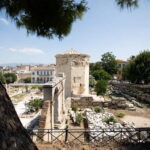
Looking beyond the Parthenon
The Acropolis visit is also about what you can see from the hill. Your guide points out the Athenian Agora, the Observatories, the Hill of Democracy, also called the Pnyx, Mars Hill, and Philopappos Hill.
These views are valuable because they show the wider setting of ancient Athens. The Parthenon can feel like a single postcard image until you look outward and see the other hills, public spaces, and monuments around it. The Pnyx, in particular, is tied to the civic life of Athens and helps explain why this area mattered beyond religion.
You also see the Odeon of Herodes Atticus and the Theater of Dionysus. These places add music, drama, and public performance to the story of the Acropolis. They remind you that ancient Athens was not only about temples and military strength. It was also a city of theater, debate, ceremony, and public gatherings.
The route is strongest when the guide keeps these connections alive. One concern raised about a less successful outing was that the commentary did not really begin until the Acropolis. That points to a practical question you can ask before setting out: will the guide provide historical context throughout the entire route, or mainly at the hilltop?
Why the Acropolis Museum is a smart follow-up
At the end of the walk, you are close to the new Acropolis Museum. The tour encourages you to visit it on your own, and that is good advice.
The outdoor visit shows you the monuments in their original setting. The museum can then give you a closer look at sculptures and archaeological objects connected with the Acropolis. Since the museum is not included, plan it as a separate activity and allow extra time if you want more than a quick look.
This is also a useful way to divide your day. The walking tour provides orientation and explanation. The museum lets you continue at your own speed, without needing to keep up with a group or guide.
What $46 buys you
At $46 per person, this is not the cheapest way to walk around central Athens, especially because entrance fees are extra. You are paying mainly for the guide, the planned route, and the historical explanation at the Acropolis.
I think the price can be fair if you want a structured first look at Athens and prefer asking questions as you go. The route covers several major sights in three and a half hours, and it removes the work of planning the order yourself.
The value is less convincing if you only want to stand outside the monuments or if you already know Athens well. You may prefer to buy your own Acropolis ticket and explore at a slower pace. The tour’s main advantage is not transport or luxury. It is the narrative that connects Syntagma Square, Plaka, the Roman monuments, and the Acropolis.
The included service is a professional guide. Hotel pickup is not included, but the meeting point is central and specific. The tour is offered in English, so you should be comfortable following a full guided walk in that language.
Who will get the most from this walk
I would choose this tour for a first visit to Athens, especially if you have limited time and want a clear introduction to the city’s main historic center. It also suits anyone who prefers a guide’s explanation to reading signs or piecing together the monuments alone.
It is a good match for people who want to see more than the Parthenon. The National Garden, Zappeion Hall, Hadrian’s Arch, Plaka, and the wider Acropolis views give the morning or afternoon a useful range.
I would be more cautious if you want a slow, highly detailed city tour from the first minute. The guide’s performance matters a lot, and the feedback is mixed about the opening walk. The Acropolis section appears to be the reliable centerpiece, while the Syntagma-to-Plaka portion may be more uneven.
You should also think about the ticket cost before comparing this with other Acropolis experiences. The $46 price does not cover admission, so calculate the full amount rather than comparing the guide fee alone.
Should you book this Athens walking tour?
Book it if you want a well-planned introduction that begins with modern Athens and ends at its most famous ancient monument. The route is logical, the historic sights are well chosen, and a strong English-speaking guide can add stories that you would not get from simply walking between ruins.
I would not book it expecting every minute to be equally engaging. The changing guards and early city walk may feel light on explanation, and entrance fees are extra. If your priority is a focused, deeply guided Acropolis visit, compare it with a tour devoted only to the hill.
For a first-time visit, though, this can be a useful orientation walk. The best reason to choose it is the full path from Parliament to the Parthenon, with enough surrounding sights to help you understand where you are in Athens.
FAQ
Where does the tour meet?
The meeting point is Hotel AMALIA Athens.
How long does the tour last?
The tour lasts 3.5 hours.
What language is the tour conducted in?
The live tour guide speaks English.
Is hotel pickup included?
No. Hotel pickup is not included.
Are Acropolis entrance tickets included?
No. Entrance fees are not included in the price.
Does the tour visit the Parthenon?
Yes. The guided Acropolis portion includes the Parthenon.
Which Acropolis monuments are included in the guided visit?
The tour includes the Propylaia, the Temple of Nike, and the Parthenon.
Does the route include the Greek Parliament?
Yes. The walk begins at Syntagma Square, where you see the Greek Parliament and the Monument of the Unknown Soldier.
What other central Athens sights are on the route?
The route includes the National Garden, Zappeion Hall, the Temple of Olympian Zeus, Hadrian’s Arch, and the Plaka area.
Is the Acropolis Museum included?
No. The museum is suggested as a separate visit after the tour, since it is nearby.
Can I cancel the booking?
Yes. You can cancel up to 24 hours in advance for a full refund.
Do I have to pay when I book?
The reserve-now, pay-later option lets you keep your plans flexible and pay nothing at the time of booking.