REVIEW · ATHENS
Classical Tour of Greece Four Days from Athens
Book on Viator →Operated by Let's Book Travel · Bookable on Viator
Ancient Greece comes at you fast on this four-day circuit: a Corinth Canal stop, the theater at Epidaurus, Mycenae, Olympia, Delphi, and the monasteries of Meteora. You cover a huge stretch of the country without having to arrange hotels, tickets, or long-distance transport yourself.
I like the wide range of sites, from the engineering of the Corinth Canal to the mountain monasteries of Meteora. I also like the practical package: three hotel nights, three breakfasts, three dinners, a licensed guide, entrance fees, and an air-conditioned bus are built into the $728.39 price.
The trade-off is the pace. Some days involve up to eight hours of driving, and one past departure had too much guide talk and too little free time. This suits you best if you want maximum sightseeing in four days, not a slow holiday.
In This Review
- The four details that shape the whole trip
- Day one, Corinth Canal to Mycenae
- Day two, the birthplace of the Olympic Games
- Day three, Delphi and the road to Meteora
- Day four, Meteora above Kalambaka
- What the $728.39 price really covers
- The guide, bus, and hotel balance
- Who should book this Greek circuit?
- Booking tips for a smoother four days
- Should you book the Classical Tour of Greece?
- FAQ
- Where does the tour begin?
- How long does the experience last?
- Which major archaeological sites are included?
- Are entrance fees included?
- Are hotels included?
- Are meals included?
- Is transportation provided?
- How large can the group be?
- Is the tour suitable for most people?
- Can I cancel for a full refund?
The four details that shape the whole trip
- A full sweep of mainland Greece: You visit the Peloponnese, Delphi, and Meteora in one loop from Athens.
- Three nights away from Athens: Overnight stays in Olympia, Delphi, and Kalambaka save you from repeating the same long drives.
- Entrance fees are covered: Major archaeological sites and museums are included, which makes budgeting easier.
- The bus is your base: A luxury air-conditioned coach handles the long distances, with a maximum group size of 50.
- Guide quality matters: Past departures featured guides named Dominique and Cassandra, with strong praise for their subject knowledge and organization.
- The price has limits: Lunches, drinks, tips, personal spending, and a €5 accommodation tax per person per night are extra.
Day one, Corinth Canal to Mycenae
The tour begins at 8:30 a.m. with pickup in Athens. The exact pickup point and time are confirmed after booking, so you need to watch for that information rather than assume a standard hotel collection.
The first stop is the Corinth Canal, reached by the coastal road. You get about 30 minutes for a short look and photographs. The canal is a quick introduction to the geography of the trip: it cuts through the narrow Isthmus of Corinth and separates the Peloponnese from mainland Greece.
Do not expect a full museum visit here. This is a brief roadside stop, useful for a stretch and a view, but the archaeological sites later in the day deserve your attention more.
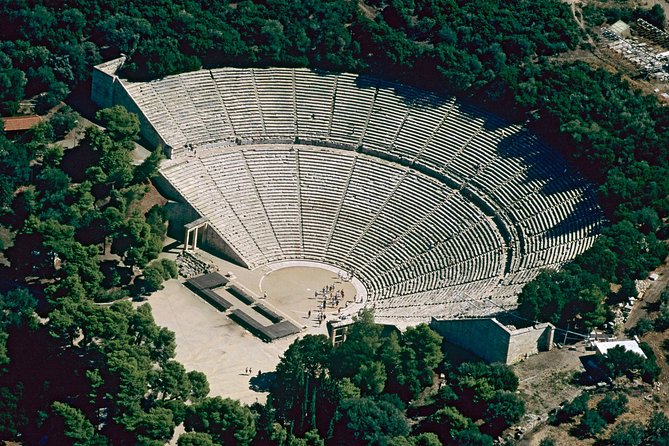
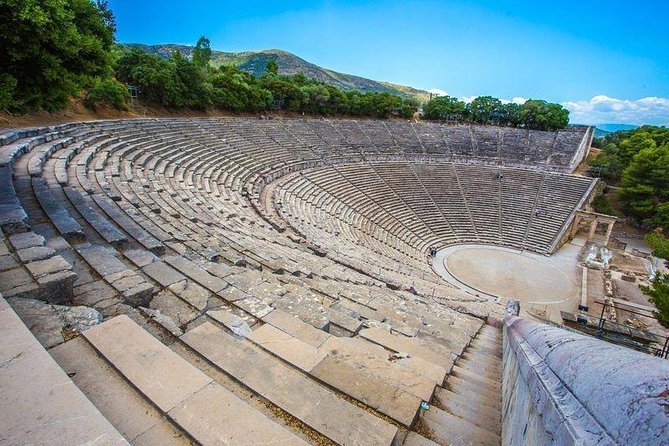
Next comes the Ancient Theatre of Epidaurus, with about two hours on site. Its fame rests on its remarkable acoustics, and this is one place where the physical setting matters as much as the stones. The theater is a carefully designed performance space, not just a ruin to photograph.
Your guide can give the theater meaning, but you will also want a few quiet minutes to take in its symmetry. Wear shoes suitable for uneven archaeological ground, and bring sun protection. The itinerary can be tight, so do not linger too long at the entrance if you want time inside the theater itself.
The coach then reaches Nafplion for a 30-minute photo stop along the promenade. Nafplion is one of the Peloponnese’s most attractive towns, but this visit is only a taste. You will not have time for an extended walk, a museum, or an unhurried meal here.
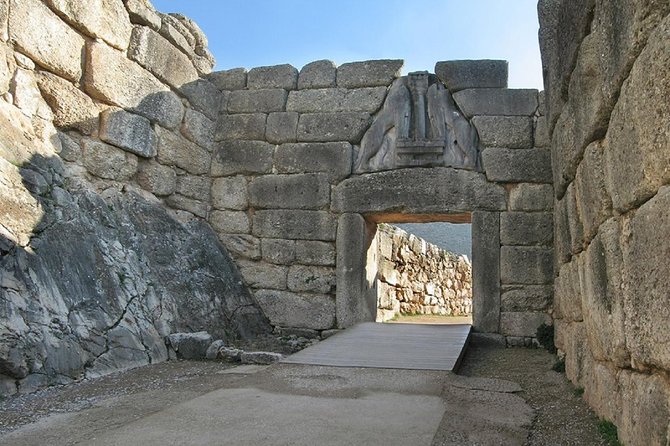
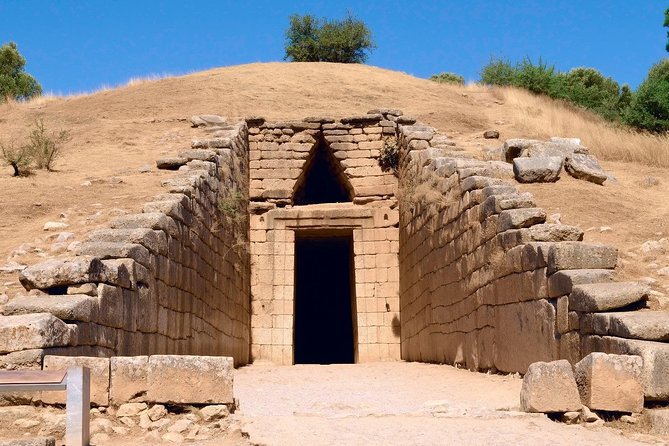
Mycenae is the major archaeological stop of the day. You spend about two hours at the site and the Tomb of Agamemnon, also known as the Treasury of Atreus. The setting on the hills gives Mycenae a different feel from Epidaurus. Here, the massive stonework, fortified entrance, and funerary monument point to a far older Bronze Age world.
This is one of the places where a guide adds real value. The remains can look scattered if you do not know what you are seeing. At the same time, keep your own pace in mind. A past departure was criticized for long talks in the sun followed by only a few minutes of independent time. If you prefer to explore quietly, tell your guide early and use breaks wisely.
After Mycenae, you make the long journey through central Peloponnese, passing Tripolis and Megalopolis before reaching Olympia. The drive is listed at about eight hours, including the day’s sightseeing and transfers. Dinner and your first hotel night are in Olympia.
A few more Athens tours and experiences worth a look

Day two, the birthplace of the Olympic Games
Olympia is more than a name attached to modern sporting events. The archaeological site was a major religious center dedicated to Zeus, and the ancient stadium helps you picture the athletic contests that later inspired the Olympic tradition.
You have about two hours for the Archaeological Site of Olympia, the Sanctuary of Olympian Zeus, the Ancient Stadium, and the museum. The museum holds important sculpture and architectural pieces from the site, so do not treat it as an optional extra. The two parts work together: the ruins show the scale and layout, while the museum helps explain what once occupied those spaces.
The itinerary lists the archaeological site and the museum as separate stops, though both are part of the Olympia visit. This can look repetitive on paper, but it is sensible in practice. Plan your energy for both rather than rushing through the outdoor ruins.
Olympia is followed by another long transfer, this time across the plains of Elis and Achaia. You cross the Corinthian Gulf on the bridge from Rion to Antirion, then pass Nafpaktos and Itea before reaching Delphi. The drive is again shown as roughly eight hours, with dinner and an overnight stay in Delphi.
This is a lot of road time. The benefit is that you reach Delphi without needing to organize a separate connection from Olympia. The cost is that this tour gives you only a short window in each place. I would choose a seat with a good view, keep water handy, and use the longer stops to rest rather than trying to stay active all day.
Day three, Delphi and the road to Meteora
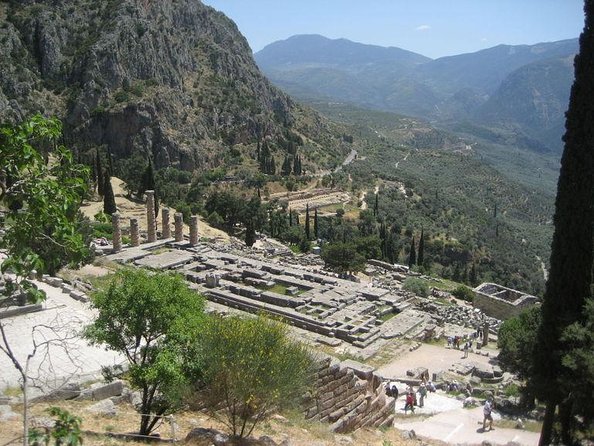
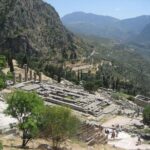
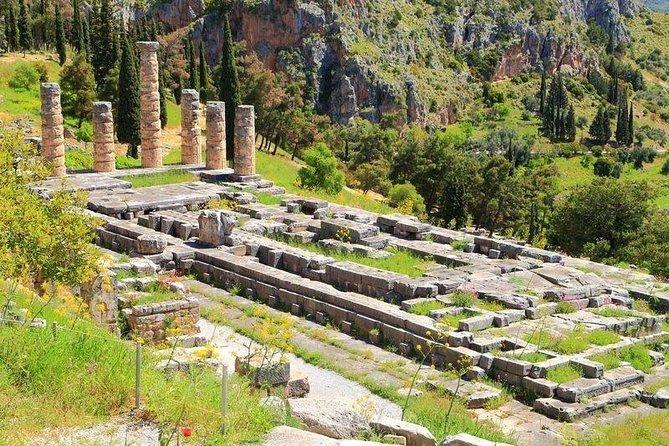
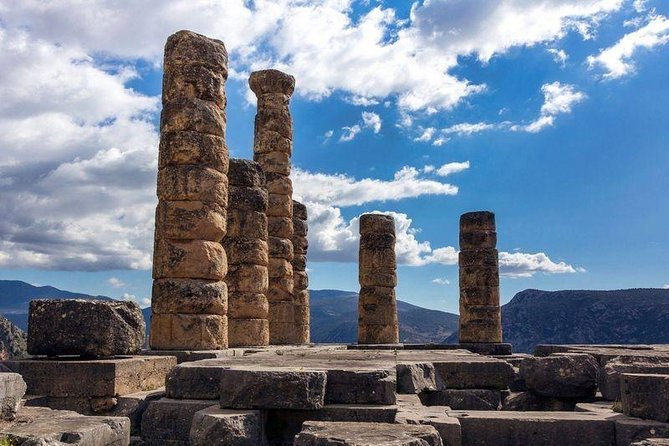
Delphi receives its main visit on the third day, with about two hours for the archaeological site and museum. In ancient Greece, Delphi was linked with the oracle of Apollo and attracted people seeking advice, answers, and religious guidance. The ruins sit on a mountainside, so the visit involves more than strolling across flat ground.
The museum is especially important because it brings smaller objects and famous sculpture into a clear setting. Seeing both the site and museum gives you a better sense of Delphi than visiting either one alone.
The practical weakness is time. Two hours must cover a large outdoor site and a museum, with a guide’s explanation included. If you want to read every label or linger at each monument, you may feel hurried. For most people, the best approach is to follow the main route, listen for the key context, and save a few minutes for your own photographs.
Then the bus heads north to Kalambaka, a small town at the foot of Meteora’s enormous rock formations. This transfer takes about eight hours according to the schedule and ends with dinner and your third hotel night.
The road connection is the reason this tour works for people who dislike planning. Delphi and Meteora are not neighboring sights, and arranging both by yourself takes care. Here, you wake near Meteora instead of spending the morning traveling there from Athens.
Your hotel category is listed as A class or T class. Exact properties are not named, so do not book this expecting a specific hotel brand or room style. The accommodation has generally been considered up to standard, though the Delphi hotel has drawn some reservations. Breakfast and dinner are included, but one past assessment found the meals somewhat tourist-oriented. That is a fair expectation: included group meals are convenient, but they are not the same as choosing a small local restaurant each night.
Day four, Meteora above Kalambaka
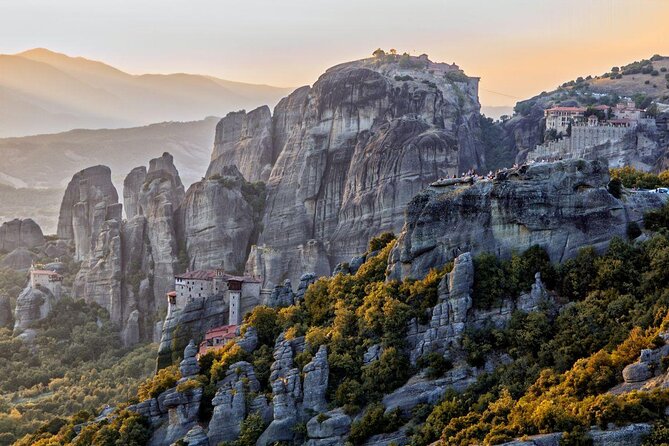
Meteora is the visual high point of the trip. Monasteries sit on top of huge rock pillars, and Byzantine art survives inside these difficult-to-reach religious buildings. The setting is unlike the classical temples and theaters visited earlier, which gives the final day a welcome change of mood.
You have about five hours for the Meteora visit, including entrance fees. The exact number of monasteries entered is not specified, so you should not assume that every monastery is included. The important thing is the combination of scenery, architecture, and religious art. Even from outside, the buildings appear precariously placed above the town and surrounding countryside.
This stop also requires practical preparation. Expect walking and uneven surfaces, and follow the guide’s instructions about access. The itinerary does not provide detailed clothing rules or monastery-by-monastery access information, so ask the guide at the start of the visit.
After Meteora, you return to Athens through Trikala, Lamia, and Thermopylae. The stop at the Leonidas Monument lasts about ten minutes and lets you see the memorial across the road. It is a short historical pause, not a full visit to a large archaeological complex.
You arrive in Athens in the early evening. The schedule gives you a useful final arrival window, but road conditions can affect the exact time. A past guide named Dominique was praised for keeping the group on schedule while adjusting to traffic, and Cassandra also received strong praise. Guides change, but these examples show why a good escort matters on a route with so many moving parts.
What the $728.39 price really covers
At $728.39 per person, this is not a cheap day tour stretched over four days. It is a bundled mainland Greece trip. You are paying for transport over long distances, three hotel nights, three breakfasts, three dinners, a licensed guide, and admission fees at the principal sites.
That package can be good value if you would otherwise need to book several hotels, arrange intercity transport, buy site tickets, and coordinate the route yourself. The tour also saves you from returning to Athens between destinations, which would waste time and add transport costs.
The word all-inclusive should be understood carefully. Lunches are not included, and neither are drinks, tips, personal expenses, or the €5 accommodation tax per person per night. The tax adds €15 per person for three nights. Since lunches are your responsibility each day, keep extra money available for food stops.
The group may contain up to 50 people. That size keeps the price below a private tour, but it can affect how easily you move through a site. Stay close to the guide when leaving the bus, and confirm meeting times before wandering off for photographs.
- All Day Cruise -3 Islands to Agistri,Moni, Aegina with lunch and drinks included
★ 5.0 · 4,958 reviews






The guide, bus, and hotel balance
A professional licensed guide is included, and the strongest praise attached to this experience has focused on the guide and driver combination. Dominique was singled out for subject knowledge, schedule control, and adapting to traffic. Cassandra and driver George were also praised for making the route work smoothly.
You should still set expectations clearly. The guide may speak at length at major sites, which some people will appreciate and others may find tiring, especially in direct sun. Ask practical questions about restroom breaks, meeting points, walking time, and how much free time you will have. That small conversation can make a packed tour feel far more manageable.
The air-conditioned bus is essential here. With two days involving roughly eight hours of driving, transport comfort is not a minor detail. The bus lets you reach remote sites while keeping the same group and guide throughout the route.
The three included dinners and breakfasts simplify the evenings. They also limit your choice. Food quality has been judged positively overall, while one assessment found the dinners touristy. I would view the meals as useful fuel and budget control, not the main reason to book the tour.
Who should book this Greek circuit?
I would recommend it to a first-time visitor who wants the major mainland archaeological sites without renting a car or working out a complicated route. It also suits history fans who want context at Mycenae, Olympia, Delphi, and Meteora rather than simply taking photographs from the roadside.
It is a strong fit if you have only four days and want to see more than Athens. The route includes several UNESCO World Heritage Sites and covers places that are difficult to combine by public transport in such a short period.
I would hesitate if you want long café breaks, independent meals, or several hours alone at each site. The schedule is fixed, the group can reach 50 people, and the long transfers are part of the bargain.
The tour also demands reasonable stamina. You spend time walking at archaeological sites, climbing or crossing uneven ground, and getting back on the bus for long stretches. The supplied information says most people can participate, but it does not promise a low-walking or mobility-adapted route.
Booking tips for a smoother four days
Confirm the pickup details as soon as they arrive after booking. The tour starts at 8:30 a.m., and a large coach cannot wait easily for late arrivals.
Bring water, sun protection, and comfortable walking shoes. The schedule places you outdoors at Epidaurus, Mycenae, Olympia, Delphi, and Meteora, often with limited free time.
Keep your lunch budget separate from the tour price. Breakfast and dinner are covered, but lunches are not. Drinks also cost extra, as do tips and personal purchases.
If your plans may change, cancellation is free up to 24 hours before the start time. Changes or cancellations inside that window are not refunded. Poor weather or failure to meet the minimum group size can lead to a different date, another experience, or a full refund.
Should you book the Classical Tour of Greece?
Book it if your priority is coverage. In four days, you see the Corinth Canal, Epidaurus, Nafplion, Mycenae, Olympia, Delphi, Meteora, and Thermopylae, with hotels, major admissions, dinners, breakfasts, and transport arranged for you.
Skip it if you measure a good holiday by free time. The bus rides are long, the stops are controlled, and the group may be large. At this price, the value comes from convenience and the sheer number of important places reached, not from a relaxed pace.
For an organized introduction to mainland Greece, I think the balance is persuasive. Go in prepared for early starts, long drives, and structured site visits, and you will get a remarkably broad look at ancient Greece and Byzantine Meteora in one compact trip.
FAQ
Where does the tour begin?
The tour begins in Athens, with a stated start time of 8:30 a.m. Pickup is offered, and the exact time and location are provided after booking.
How long does the experience last?
The tour lasts approximately four days and includes three nights of accommodation.
Which major archaeological sites are included?
The route includes Epidaurus, Mycenae, Olympia, Delphi, and Meteora. It also includes stops at the Corinth Canal, Nafplion, and the Leonidas Monument at Thermopylae.
Are entrance fees included?
Yes. Entrance fees for the included visits are covered, including the listed archaeological sites, museums, and Meteora.
Are hotels included?
Yes. Accommodation is provided for three nights in A class or T class hotels. The exact hotel properties are not specified.
Are meals included?
Three breakfasts and three dinners are included. Lunches, drinks, and other beverages are not included.
Is transportation provided?
Yes. Transportation is by luxury air-conditioned bus.
How large can the group be?
The tour can have a maximum of 50 participants.
Is the tour suitable for most people?
The provided information says most people can participate. You should still expect walking at archaeological sites and Meteora, plus long bus journeys.
Can I cancel for a full refund?
You can cancel at least 24 hours before the experience begins for a full refund. Cancellations or changes made less than 24 hours before the start time are not refunded.