REVIEW · ATHENS
From Athens: 4-Day Peloponnese, Delphi, and Meteora Tour
Book on GetYourGuide →Operated by ARTYTOURS · Bookable on GetYourGuide
The real draw here is the sheer sweep of the route. In four days, you move from the tombs of Mycenae and the theater at Epidaurus to Olympia, Delphi, and the monasteries perched above Meteora. Few short trips from Athens pack in so many major ancient sites.
I like the practical package: three hotel nights, breakfasts, dinners, transport, and entry fees are included, so you do not have to rebuild the trip from scratch. I also like the variety, from the Corinth Canal and a famous theater to an Olympic stadium and Byzantine monasteries.
The catch is the pace. This is a road trip with several long bus stretches, not a leisurely archaeological holiday. The guide speaks Spanish, and the quality of the experience depends heavily on how well the guide balances explanation with time at the actual ruins.
In This Review
- Key points to know
- Why this route works for serious history fans
- Day 1: Corinth Canal, Mycenae, and Epidaurus
- Day 2: Ancient Olympia, birthplace of the Olympic Games
- Day 3: Delphi and the Oracle of Apollo
- Day 4: Meteora monasteries above the Byzantine rocks
- Spanish guiding and the importance of tour style
- Hotels, dinners, and what the $742 price covers
- The physical demands of four packed days
- Should you book this Peloponnese, Delphi, and Meteora tour?
- FAQ
- What language is the tour conducted in?
- What meals are included?
- Are entrance fees included?
- Where is the meeting point in Athens?
- What should I wear at the Meteora monasteries?
- Is the tour suitable for wheelchair users?
Key points to know
- Five major historic areas in four days: Mycenae, Epidaurus, Olympia, Delphi, and Meteora all appear on the route.
- Spanish is the guiding language: Confirm this suits you before booking, especially if you selected another language while arranging your trip.
- Meals and hotels are built in: Three breakfasts, three dinners, and three nights in a 3-star or 4-star hotel are covered.
- The bus days are long: You gain reach, but you give up free time and flexibility.
- Meteora includes two monasteries: Bring clothing that covers your shoulders and knees.
- The package costs $742 per person: That is easier to justify if you value convenience, included admissions, and a tightly organized route.
Why this route works for serious history fans
This tour links places that are awkward to visit together without a car. Mycenae and Epidaurus lie in the Peloponnese, Olympia sits farther west, Delphi is across the Gulf of Corinth area, and Meteora is well north of Athens. The coach handles the difficult connections while a guide provides the historical framework.
You are not simply checking off ruins. The sequence shows different chapters of Greek history and culture. Mycenae introduces the Bronze Age world. Epidaurus reveals ancient theater design. Olympia connects sport with religion. Delphi focuses on prophecy and Apollo. Meteora shifts the story toward Orthodox monastic life and medieval Greece.
That range is the strongest reason to choose this trip. If you want one narrow subject, such as classical Athens or mainland monasteries, a shorter tour would give you more time. If you want a broad first look at mainland Greece, this route makes efficient use of four days.
A few more Athens tours and experiences worth a look
Day 1: Corinth Canal, Mycenae, and Epidaurus
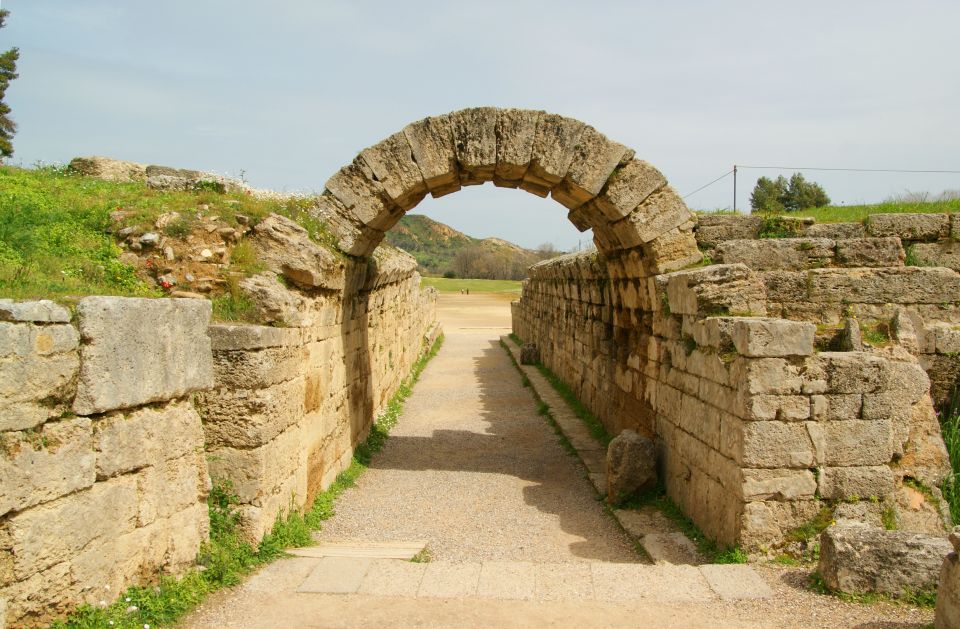
The departure begins in Athens near the Melina Mercouri monument, close to the Acropolis metro station. Representatives meet you there and put you on the coach before you meet the guide. Arrive early enough to find the meeting point without a rush, since the departure details are an important part of a tightly timed morning.
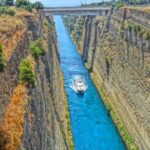
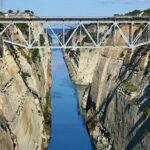
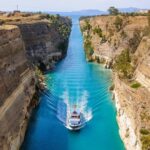
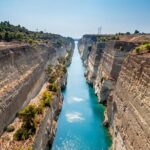
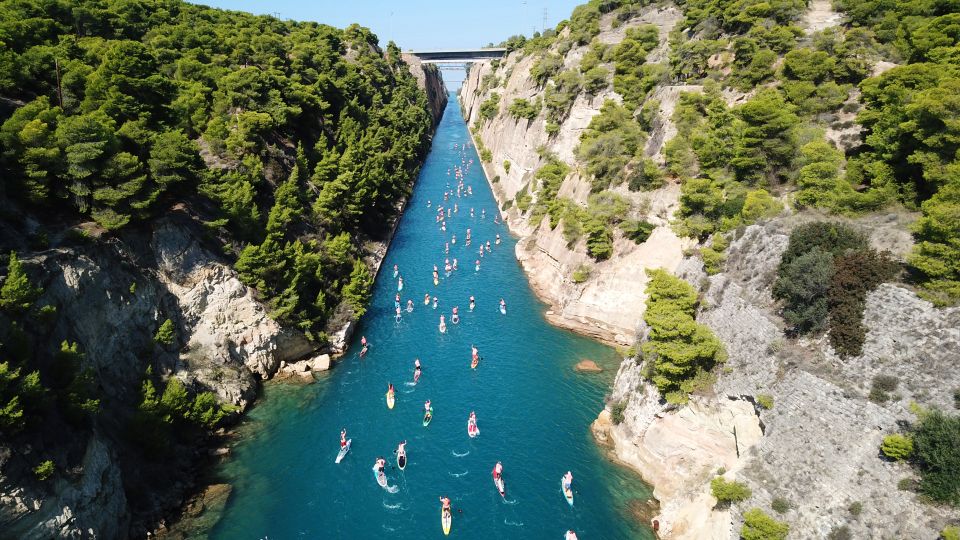
The first stop is the Corinth Canal. It is a quick but worthwhile introduction to the trip. The canal cuts through the narrow Isthmus of Corinth, linking the Gulf of Corinth with the Saronic Gulf. The steep sides make the engineering easy to appreciate, even during a short stop.
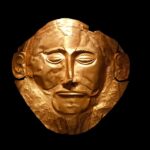
From there, the route continues into the Argolis region and to Mycenae. The archaeological site and museum open a window onto the Bronze Age kingdom associated with Agamemnon in later Greek legend. The stonework, monumental gateways, and tombs feel very different from the marble temples you may have seen around Athens.
Mycenae rewards a guide who can separate archaeology from later myth. You should expect uneven ground and walking between exposed ruins, so sturdy shoes matter. The site is one of the places where the tour’s headsets can help, since you can look around while still following the explanation.
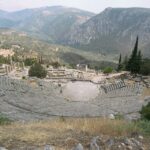
Epidaurus brings a different kind of ancient achievement. Its theater is famous for its acoustics, and the visit gives you a chance to appreciate how carefully the structure was designed for sound and sight. The setting is open and spacious, but the stop still requires walking and standing.
Day 1 ends in Ancient Olympia, with dinner and an overnight stay. It is a full opening day, and you will probably have little free time after arriving. That is the tradeoff for fitting both Mycenae and Epidaurus into the same day.
Day 2: Ancient Olympia, birthplace of the Olympic Games
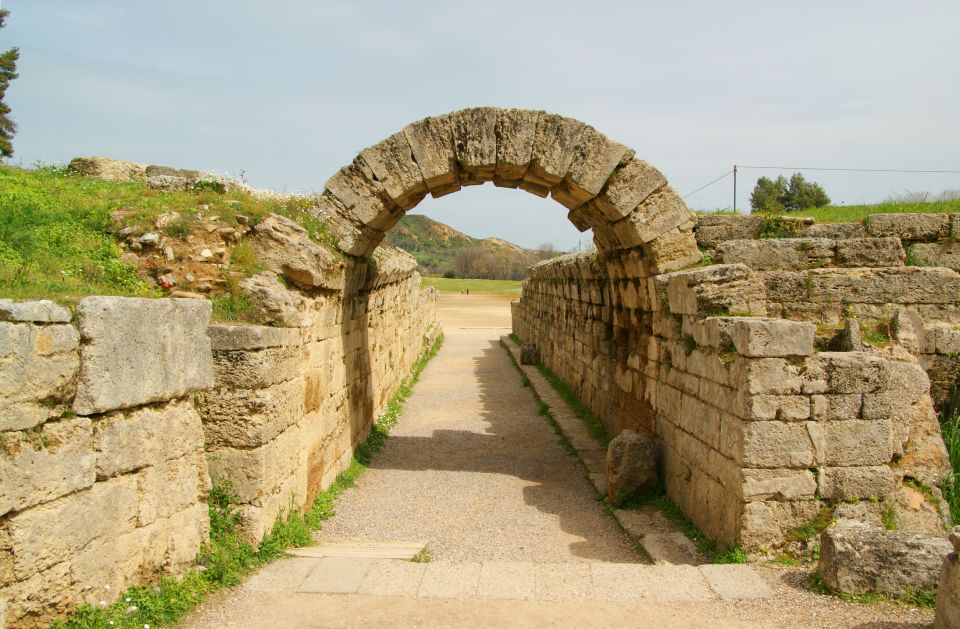
After breakfast, you check out and visit the archaeological site and museum at Ancient Olympia. This is one of the most important stops on the whole trip, not just because of the stadium, but because Olympia was a religious sanctuary as well as the home of the ancient games.
The stadium is the obvious highlight. Walking into the space where the Olympic contests were held gives the modern games a much older setting. The open track is less about grand architecture than scale and atmosphere. You can picture competitors entering the stadium and spectators gathering for events tied to the worship of Zeus.
The museum helps explain the objects and sculptures found at the site. A guide can make the difference here, since the remains are spread across a broad area and the original purpose of each structure is not always obvious from the stones alone.
You have an optional lunch after the visit, but lunch and drinks are not included. Keep some money available, and do not assume that the three included dinners cover daytime food. The coach then begins the long journey to Delphi, followed by dinner and an overnight stay there.
This is one of the days when the trip’s pace becomes clear. Olympia deserves time, yet the route must also move north. You get the major site, but not the freedom to linger for an entire afternoon.
Day 3: Delphi and the Oracle of Apollo
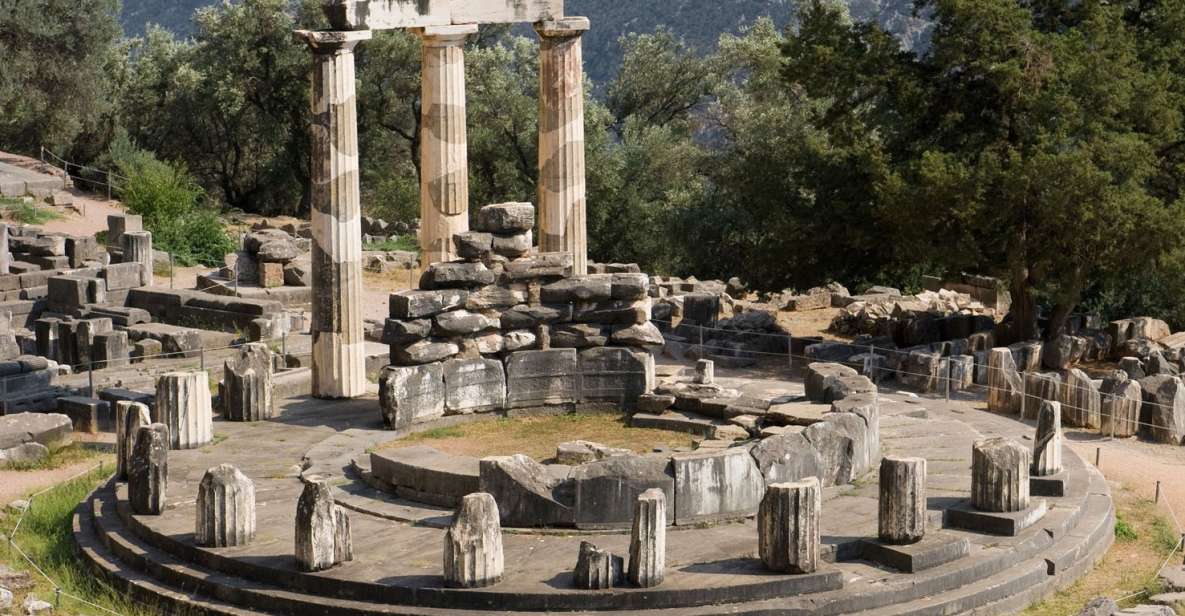
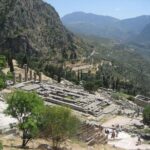
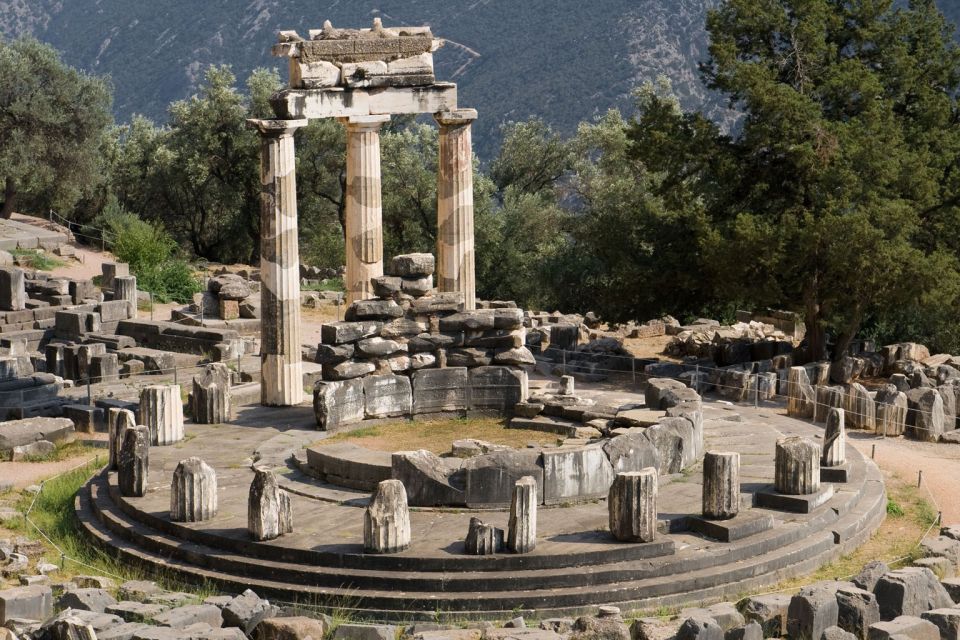
Day 3 starts with breakfast and checkout, followed by Delphi’s archaeological site and museum. Ancient Greeks regarded Delphi as the Navel of the Earth, a spiritual center where the oracle of Apollo, Pythia, delivered prophecies.
The site sits on a mountainside, so expect sloping paths and uneven surfaces. The setting is part of the experience. Temples, treasuries, and other remains appear along the route, with views across the surrounding countryside. You should wear shoes with a firm sole and bring a hat for sunny weather.
The museum gives context to the ruins, including sculpture and objects connected with the sanctuary. Here is where the guide’s style matters most. A strong explanation can clarify how Delphi worked as both a religious center and a meeting place for communities across the Greek world.
There is also a practical warning. At least one reported experience on this tour involved a guide spending far too long speaking inside the museum, leaving too little useful time among the ruins. The complaint was not about the guide’s personal manner or historical knowledge, but about poor time choices, especially when rain threatened.
That is a fair concern for any archaeology tour. You are paying to see the site, not only to hear a lecture. If the weather turns, you want the guide to adjust the order of the visit and protect outdoor viewing time. The included headsets make long explanations easier to hear, but they do not solve a badly managed schedule.
After Delphi, you may stop for lunch at a traditional Greek tavern, at your own expense. The route continues to Kalambaka, the town used for the Meteora overnight stay. Dinner and the hotel are included.
Day 4: Meteora monasteries above the Byzantine rocks
Meteora provides the trip’s most dramatic change of mood. Huge rock formations rise above the area, topped by Orthodox monasteries that seem to cling to the stone. The site is protected as a UNESCO World Heritage Site for both its natural setting and its religious importance.
The morning visit includes two monasteries. You learn about Orthodox monasticism and the ascetic life that developed in this remote setting. The experience is not only about photographs. The buildings, chapels, and religious traditions explain why monks chose such difficult places for worship and retreat.
Dress correctly. Your shoulders and knees must be covered when visiting the monasteries. Comfortable shoes are equally important, since the approach can include steps and uneven surfaces. The tour is not suitable for people with mobility impairments or wheelchair users.
The views are a major reward, but access can be tiring. This is not a simple coach stop where you step off, take a picture, and return. Give yourself enough energy for the walk and allow time to follow monastery rules respectfully.
After the visit, the group stops for lunch before returning to Athens. Lunch is not included, and the final drive can be long. You arrive with a full four-day survey of mainland Greece, but you should not expect a relaxed final afternoon in Athens.
- All Day Cruise -3 Islands to Agistri,Moni, Aegina with lunch and drinks included
★ 5.0 · 4,958 reviews





Spanish guiding and the importance of tour style
The official guiding language is Spanish. That should be your first booking check. If you need English, Japanese, or another language, do not assume that the language shown during an early booking step will be the language used on the road. Confirm it before payment and again in your travel documents.
The tour promises a licensed guide who accompanies you throughout the journey. That continuity is useful. You hear one connected story instead of starting from scratch with a new guide at every monument.
Still, a guide can either make a packed trip work or make it exhausting. A documented account describes a Spanish guide who spoke continuously during long coach rides, even when passengers needed quiet time. That is worth considering because the drives are substantial. On a four-day coach trip, rest is part of the service.
You should also pay attention to the balance between guided time and free time. The best approach at sites such as Delphi is a clear introduction, focused explanations at key points, and enough time for you to explore. If you prefer slow independent visits, this format may feel restrictive.
Hotels, dinners, and what the $742 price covers
At $742 per person, this is not a budget bus outing. The price makes more sense when you count what is included: air-conditioned coach transport, a live Spanish-speaking guide, three nights in selected 3-star or 4-star hotels, three breakfasts, three dinners, entry fees, skip-the-line access, headsets, and onboard WiFi.
The value is strongest for you if you would otherwise need to arrange several hotels, a rental car, fuel, admissions, and a route across much of mainland Greece. The tour removes the need to navigate unfamiliar roads and keeps the major archaeological sites connected.
The value is weaker if you want luxury, long meals, or plenty of unplanned time. Lunches and drinks are extra, personal expenses are extra, and the accommodation tax is paid at reception. From April through October, the tax is €5 per room per night for 3-star hotels and €10 per room per night for 4-star hotels. From November through March, it drops to €1.50 for 3-star hotels and €3 for 4-star hotels.
The hotel category depends on the option you select. Ask what category applies to your booking, and remember that the tax is charged per room, not per person. That small detail matters if you are sharing.
The physical demands of four packed days
You need comfortable shoes, a hat, and a passport or ID card. The sites involve walking outdoors, uneven archaeological ground, steps, and monastery access. Weather can affect the experience, especially at Delphi and Meteora.
The bus offers air conditioning and WiFi, which help during long stretches. Headsets are also included, so you should be able to hear the guide without standing close to the group. These features improve comfort, but they do not turn the road sections into free time.
I would choose this tour for a fit adult who wants a strong overview and does not mind early starts, hotel changes, and scheduled meals. I would hesitate if you have limited mobility, dislike coach travel, or want to spend half a day at one ruin.
Free cancellation up to 24 hours before departure and the reserve-now, pay-later option give you some booking flexibility. They do not change the physical pace, language, or long driving hours, so those are the factors to settle first.
Should you book this Peloponnese, Delphi, and Meteora tour?
Book it if your priority is coverage. You will reach Mycenae, Epidaurus, Olympia, Delphi, and Meteora without arranging a complicated mainland route yourself. The included admissions, dinners, breakfasts, hotels, and transport make the $742 price easier to defend.
Think twice if your priority is depth. Delphi, in particular, needs a guide who protects time at the ruins instead of filling the museum visit with extended commentary. The tour is also a poor fit for anyone who needs accessible routes or quiet, flexible days.
My practical advice is simple: confirm that you are booking the Spanish departure, check the hotel category, budget separately for three lunches and drinks, and pack clothing suitable for monasteries. If you accept the pace and language, this is an efficient way to see a remarkable spread of Greek sites. If you want to linger, travel independently or split the route into two shorter trips.
FAQ
What language is the tour conducted in?
The live tour guide speaks Spanish. Confirm that Spanish works for you before booking.
What meals are included?
The tour includes three breakfasts and three dinners. Lunches and drinks are not included.
Are entrance fees included?
Yes. Entry fees and skip-the-line access are included.
Where is the meeting point in Athens?
Meet in front of the Melina Mercouri monument, close to the Acropolis metro station. Representatives will meet you there and board you onto the bus before you meet the guide.
What should I wear at the Meteora monasteries?
Your shoulders and knees must be covered. Comfortable shoes are recommended for the site visits.
Is the tour suitable for wheelchair users?
No. The tour is not suitable for people with mobility impairments or wheelchair users.