REVIEW · ATHENS
4-Day Most Popular Greek Sites: Nafplio, Olympia, Delphi, Meteora
Book on Viator →Operated by EUDAIMONIA Private Tours · Bookable on Viator
The big draw here is simple: in four days, you reach Greece’s headline ancient sites and Meteora without joining a busload of strangers. You cover a lot of ground, from the Peloponnese to Central Greece, but your own vehicle lets you stop for photos, adjust the pace, and linger over lunch.
I especially like the private format and the food included each day. I also like that the plan makes room for Epidaurus, Mycenae, Olympia, Delphi, and Meteora, rather than treating one or two of them as quick roadside stops. The tradeoff is the driving. This is an ambitious tour, not a slow village holiday, and some days are full from breakfast until evening.
In This Review
- Four things to know before booking
- What $2,805.83 buys you
- Day one: Corinth, Epidaurus, Nafplio, and Mycenae
- Day two: Olympia and the Rio-Antirrio Bridge
- Day three: Delphi, Arachova, and the road to Meteora
- Day four: Meteora’s monasteries and Thermopylae
- Private guiding, meals, and comfort
- Who should book this four-day route?
- Should you book it?
- FAQ
- Where does the tour begin and end?
- How long does the experience last?
- Is this a private tour?
- Are hotel pickup and drop-off included?
- Are meals included?
- Are entrance fees included?
- Is a professional licensed guide included?
- Which monasteries are visited at Meteora?
- How much walking is required?
Four things to know before booking
- Four major Greek regions in four days: You move from Athens through the Peloponnese, across the Rio-Antirrio Bridge, into Delphi and Meteora, then return by way of Thermopylae.
- Private vehicle, private party: Only your group and your tour leader take part, with pickup and drop-off included.
- Meals are a real part of the experience: Four lunches, three breakfasts, drinks, bottled water, and quality lodging are included.
- The guide can shape the day: Panayiotis and Theodore have both led this experience. Theodore is an archaeologist, while Panayiotis is praised for his warm, family-friendly manner.
- Entrance fees are extra: The tour covers transport, hotels, breakfasts, lunches, and drinks, but archaeological sites, museums, and monasteries charge separately.
- Meteora is the grand finale: You visit two or three monasteries that are open that day, including Great Meteoron, Varlaam, or Holy Trinity when possible.
What $2,805.83 buys you
At $2,805.83 per person, this is an expensive four-day trip. The price makes more sense if you compare it with what you would otherwise need to arrange: a private vehicle, a driver, three nights of accommodation, breakfasts, four lunches, bottled water, and transport across a large part of mainland Greece.
You are also paying for time saved. Reaching Nafplio, Olympia, Delphi, and Meteora independently by public transport would require careful connections and several separate bookings. A standard group coach can cost less, but it may bring fixed meal stops, a larger crowd, and less freedom at the ruins.
The price does not include admission to the archaeological sites, museums, or monasteries. A professional licensed guide is also optional, so ask exactly what guiding service your tour leader provides before you book. The included information booklet helps, but it is not the same thing as having a licensed specialist explain every stone.
The strongest value comes from the private setup. You can ask for more time in Nafplio, skip shopping stops, or use an optional visit to Ancient Corinth if your group wants it. You should still confirm what kind of vehicle and hotel category will be provided for your particular booking, though the transport is described as a recent, non-smoking vehicle from the 2021 to 2023 range.
A few more Athens tours and experiences worth a look
Day one: Corinth, Epidaurus, Nafplio, and Mycenae
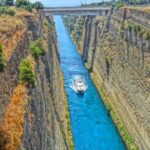
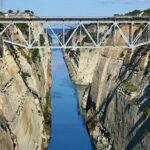
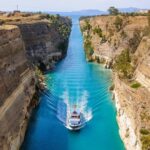
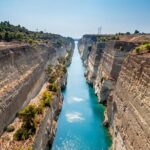
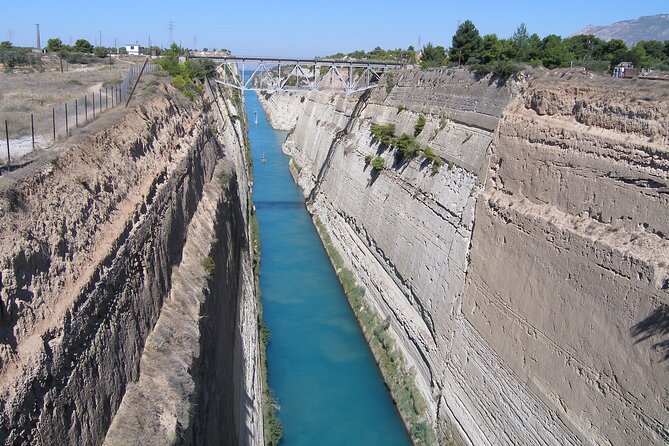
The morning begins with hotel pickup at about 8:00 a.m. The first stop is the Corinth Canal, a quick fifteen-minute photo break. The canal cuts through the Isthmus of Corinth and separates the Peloponnese from mainland Greece in a way that makes the peninsula feel almost like an island.
Do not expect a long visit here. Fifteen minutes is enough for a look and a photograph, not for a full explanation of the canal’s construction or maritime role.
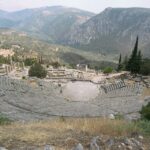
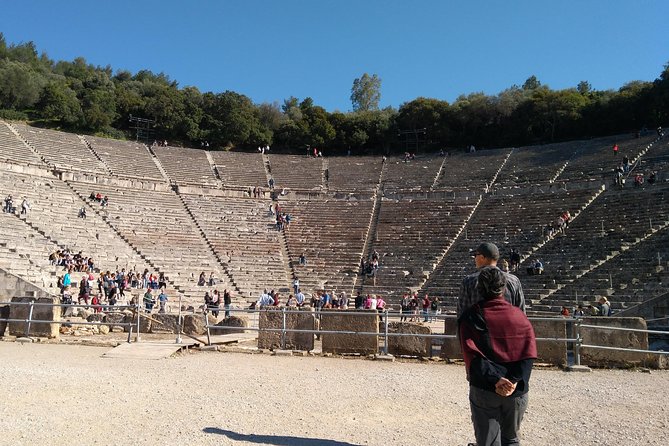
Next comes the Ancient Theatre of Epidaurus, with about an hour and a half on site. Its fame rests on its remarkable acoustics. The theater is the kind of place where you should pause before rushing to take pictures. The setting and the carefully shaped stone seating help explain why this venue remains one of Greece’s most memorable ancient structures.
Admission is not included, and you should expect some walking over archaeological ground. Comfortable shoes matter from the first day.
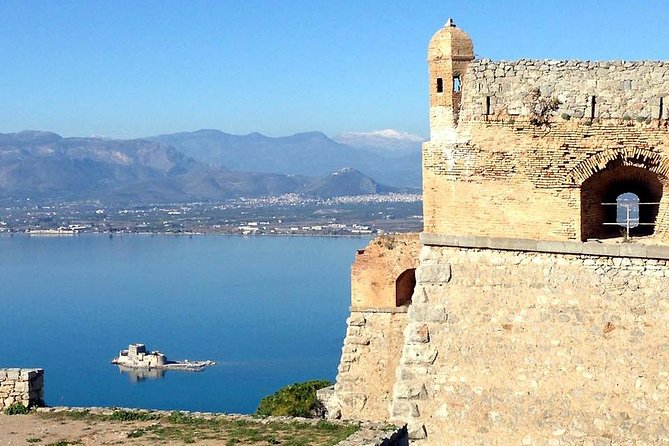
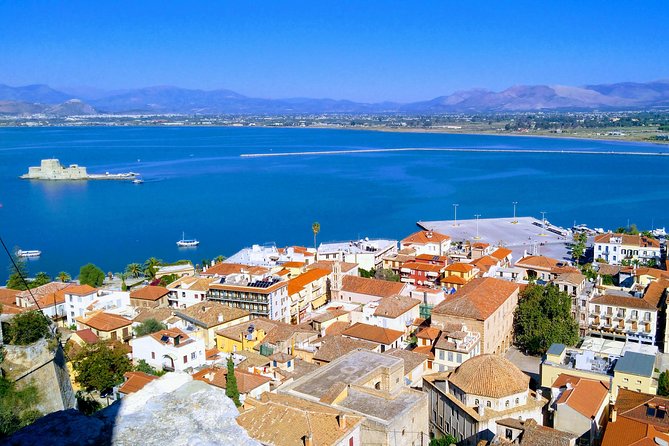
The route then reaches Palamidi Castle, high above Nafplio. The plan calls for walking through the Venetian fortress and going down the famous 999 steps into the old town. That descent gives you a fine approach to Nafplio, but it is also one of the clearest tests of the tour’s moderate fitness requirement.
You can enjoy the castle without treating the steps as a race. If knees or balance are a concern, ask how the visit can be adjusted. The supplied schedule specifically emphasizes the walk down, so this is worth discussing before departure.
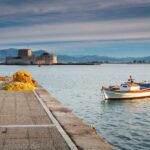
Nafplio receives about two hours, including lunch and time in the old town and port. This is one of the most pleasant pauses in the four days. Its compact streets, waterfront setting, and romantic feel offer a welcome change from ruins and road time.
The included lunch is one of the tour’s main selling points. Theodore, one of the named guides associated with the experience, is praised for choosing excellent Greek cuisine. That detail matters because meals on a fast-moving tour can easily become an afterthought. Here, food is intended to be part of the day rather than fuel grabbed between stops.
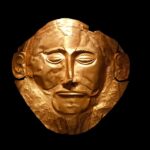
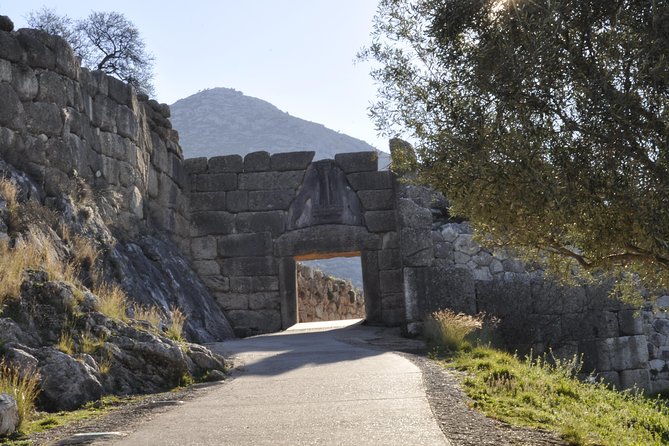
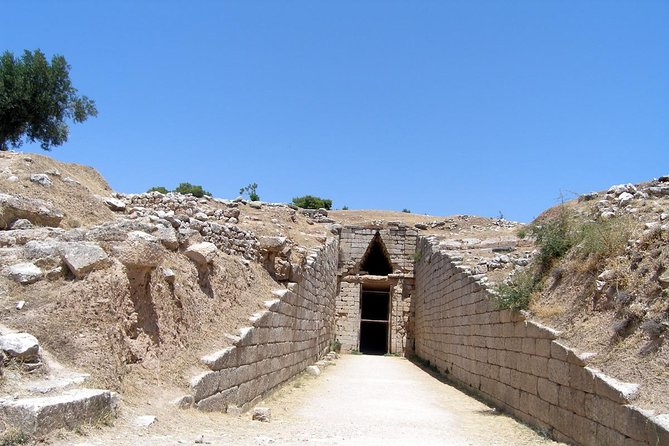
The afternoon continues to Mycenae, the UNESCO-listed center linked with King Agamemnon and the Mycenaean civilization. Allow two hours for the ruins and museum. The site gives you a chance to see some of Greece’s best-known early remains in their setting, then use the museum to put the objects and buildings into context.
Admission is extra. Mycenae also adds another substantial walking stop to a day that has already included Epidaurus and Palamidi. You will see a great deal, but you should pace yourself.
Ancient Corinth is listed as optional, with about an hour. It is not a required part of the core route, so its inclusion may depend on timing and your group’s interests. The site’s occupation reaches back to the Neolithic period, while its major prosperity began in the eighth century BC. If your priority is classical ruins, it can be a useful addition. If you are already tired, Nafplio deserves your evening energy more.
There is also an optional ride to Nafplio port and the old town after dinner, with a return transfer to your hotel. That is a thoughtful touch. You can see Nafplio by day, then return after dark without arranging a taxi yourself.
Day two: Olympia and the Rio-Antirrio Bridge
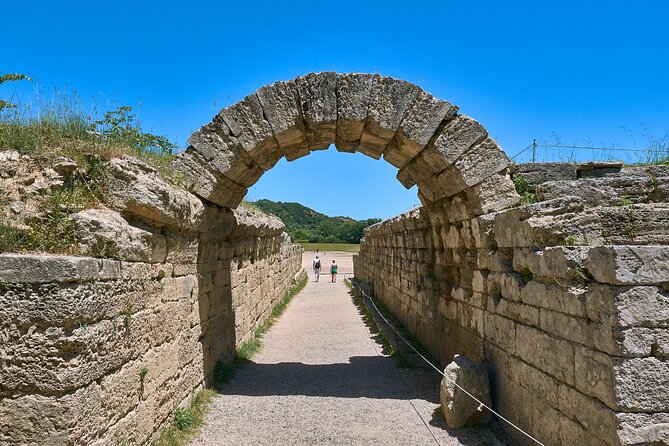
Day two is more focused. The principal visit is Olympia, the birthplace of the original Olympic Games, founded in the eighth century BC. The archaeological site includes the stadium, training areas, and temples dedicated to Hera and Zeus.
The listed site time is one hour, which is fairly brisk for a place with so much ground to cover. Your private group may be able to adjust the pace, but do not assume you can inspect every corner slowly. Olympia rewards some preparation, especially if you want to understand how athletic training, religious worship, and public ceremony fitted together.
The Archaeological Museum of Olympia receives two hours. That is longer than the ruin visit, and it is a good choice. The museum contains sculptures connected with the Temple of Zeus and the famous Hermes attributed to Praxiteles. The balance between ruins and museum is useful: one shows the site in place, while the other lets you study the art at close range.
The Rio-Antirrio Bridge follows as you head toward Delphi. The crossing takes only about ten minutes, but it is an impressive piece of modern Greece. The cable-stayed bridge links the Peloponnese to mainland Greece across the Gulf of Corinth.
This day highlights one of the tour’s practical strengths. You are not simply returning to Athens after Olympia and starting again the next morning. The route keeps moving north, which saves time later, though it also means another long stretch in the vehicle.
Day three: Delphi, Arachova, and the road to Meteora
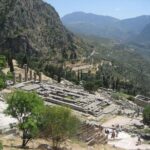
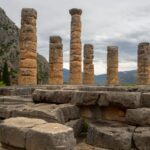
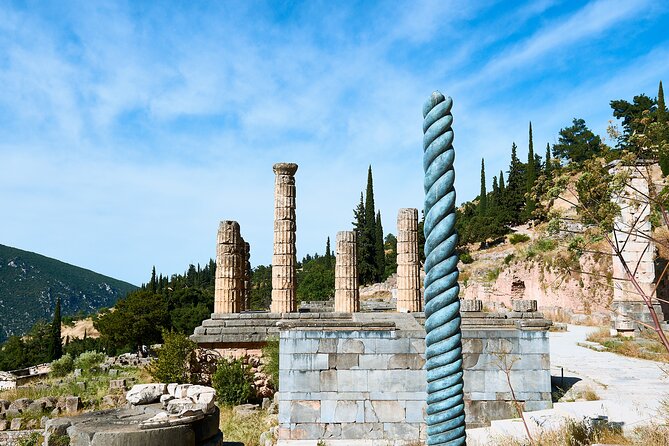
Delphi is the spiritual center of the four-day plan. The ancient sanctuary was associated with Apollo’s oracle and the omphalos, or navel of the world. You have about two hours at the main site, enough to see the key remains without turning the visit into a hurried photograph stop.
The Archaeological Museum of Delphi follows for thirty minutes. That is a short museum visit, so you should expect a focused look rather than a full study of its collection. The museum helps connect the sanctuary’s buildings with the objects found there, but visitors who love museums may wish for more time.
The Tholos of Athena Pronaia receives twenty-five minutes. The tour makes a point of including it, and that is valuable because the circular structure is one of the most recognizable images associated with Delphi. It sits apart from the main sanctuary, so a rushed plan can easily leave it out.
A short stop in Arachova provides a change of mood. This mountain village is known as a ski destination and a favorite retreat for public figures. You have about thirty minutes for photographs and lunch, though the exact balance may depend on the day’s timing.
Then comes the road to Meteora. There may be enough daylight for evening photographs and possibly one monastery, but that is optional and depends on arrival time. You should treat this as a bonus, not a promise. The guaranteed monastery visits are planned for the following day.
This is one of the longest and most demanding days. Delphi and Arachova are worthwhile, but you will also spend many hours moving north. The reward is waking up near Meteora instead of trying to reach it as a rushed day trip from Athens.
Day four: Meteora’s monasteries and Thermopylae
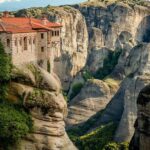
Meteora is the visual high point of the trip. Monasteries sit on tall rock pillars, creating a setting unlike the classical temples and theaters seen earlier. The plan visits two or three monasteries that are open that day, so the exact combination can vary.
Great Meteoron is the largest, oldest, and most important of the preserved Meteora monasteries. Allow about an hour. Varlaam receives forty-five minutes and carries the name of the ascetic who first climbed its rock in the fourteenth century. The present buildings began in the early sixteenth century after the site had been abandoned for roughly two centuries.
Holy Trinity receives about an hour and is described as a favorite stop. Its construction is generally placed between 1458 and 1476. Seeing two or three monasteries gives you more than a single postcard view, but you should be ready for steps and uneven surfaces. Admission is extra, and opening schedules determine which sites you enter.
Meteora is also where the private format may help most. If your group needs a pause, wants more time for photographs, or prefers to focus on fewer monasteries, you can raise that with the tour leader. A tightly organized coach group usually has less room to adjust.
The return includes a thirty-minute stop at Thermopylae, the battlefield associated with King Leonidas of Sparta and the Greek alliance against Xerxes I in 480 BC. It is a concise historical stop, not a full museum visit. Still, it gives the return journey a clear final chapter before Athens.
- All Day Cruise -3 Islands to Agistri,Moni, Aegina with lunch and drinks included
★ 5.0 · 4,958 reviews




Private guiding, meals, and comfort
The experience includes a driver and tour leader, not automatically a professional licensed guide. That distinction is important. Theodore is described as an archaeologist, and Panayiotis is praised for his strong people skills and broad understanding of the places visited, but you should confirm who will lead your departure and what credentials or guiding services are included.
The private group format means only your party takes part. That suits families, couples, or friends who want to ask questions freely and avoid strangers setting the pace. It also makes the tour customizable, though flexibility cannot erase the distances involved.
Accommodation is described as top quality, with breakfast on all three nights. Four lunches are included, along with drinks and bottled water in the vehicle. The food component received especially strong praise, so anyone who sees Greek meals as part of the trip’s purpose should give this feature real weight.
The tour also supplies an information booklet covering activities and sites. Use it as preparation, especially since admission fees are separate and the schedule can be full.
Who should book this four-day route?
I would choose this for a first visit to mainland Greece when you want the major sites but do not want to rent a car or manage intercity connections. It also suits families who value a private vehicle and couples who prefer a more personal pace.
You should be comfortable with long drives, early starts, archaeological walking, castle steps, and monastery stairs. If you want two slow days in each place, this is not the right design. Nafplio, Delphi, and Meteora each deserve more time than this route can provide.
The tour has a strong human side, too. Panayiotis is noted for making a family feel cared for, while Theodore is praised for attentive service, archaeological skill, and good meal choices. Those details suggest that the quality of your experience will depend heavily on the person assigned to your group, so ask about the guide when booking.
Cancellation terms are strict near departure: full refunds require cancellation at least six full days ahead. A cancellation two to six full days before departure receives 50 percent back, while cancellation less than two full days before the start receives no refund.
Should you book it?
Book this tour if your priority is maximum coverage with private transport, included Greek meals, and better control over your time than a large coach tour allows. The route links places that are awkward to combine on your own, and the included hotel stays and meals reduce planning work.
Skip it if you dislike long road days, want licensed specialist guiding included by default, or need a low-cost way to see Greece. At $2,805.83 per person before entrance fees, it asks for a serious budget. For the right group, the price buys convenience, privacy, and access to four major sites in one carefully connected journey.
FAQ
Where does the tour begin and end?
The tour begins in Athens with hotel pickup at about 8:00 a.m. It returns to Athens after the Meteora and Thermopylae visits on day four.
How long does the experience last?
It lasts approximately four days and includes three nights of accommodation.
Is this a private tour?
Yes. Only your party and the tour leader participate.
Are hotel pickup and drop-off included?
Yes. Hotel pickup and drop-off are included.
Are meals included?
Yes. The package includes three breakfasts and four lunches, plus drinks and bottled water in the vehicle.
Are entrance fees included?
No. Entrance fees for archaeological sites, museums, monasteries, and similar attractions are not included.
Is a professional licensed guide included?
No. A professional licensed guide is listed as optional. The experience includes a driver and tour leader.
Which monasteries are visited at Meteora?
The plan includes two or three monasteries that are open on the day, with Great Meteoron, Varlaam, and Holy Trinity specifically listed.
How much walking is required?
A moderate level of physical fitness is required. The route includes archaeological sites, castle walking, the 999 steps down from Palamidi, and monastery visits.